
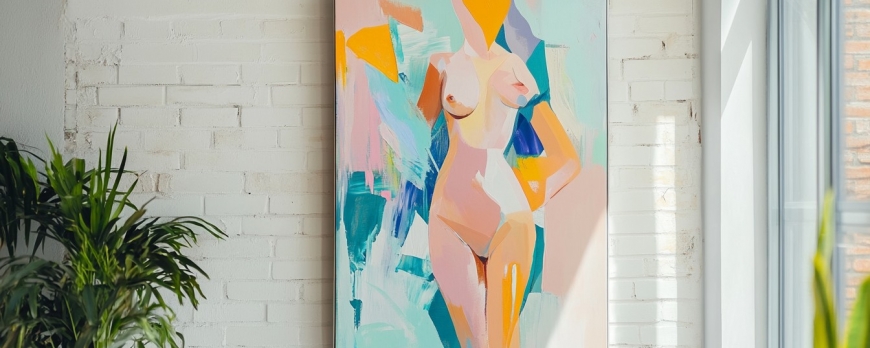
The Beauty of Modern Nude Paintings: An Exploration of Contemporary Art
Introduction
The nude has a long history, from Paleolithic venus figurines to Renaissance paintings, and now to modern and contemporary art. Modern nude paintings are an important part of 20th and 21st century art. They show beauty and raise questions about human nature, identity, vulnerability, and freedom.
The Roots of Modernity
To appreciate modern nude paintings, we must understand how these artists changed tradition. Classical art focused on perfect bodies and ideal proportions. Modern artists chose a different path. They showed imperfection, celebrated individuality, and questioned social rules about the body.
At the start of the 20th century, artists like Amedeo Modigliani painted nudes with long, elegant forms. His women, with long necks and almond-shaped eyes, often have no pupils. These figures are not just women; they show the fragility and beauty of being human.


The Expression of Vulnerability
Modern nude paintings often show real vulnerability. Unlike traditional idealized poses, these nudes show people in private moments, alone or thinking. This honesty creates a strong connection between the viewer and the painting.
Egon Schiele used sharp, nervous lines to show strong emotions. His twisted bodies and unusual poses reveal inner feelings. His paintings show both the body and the soul in a raw, human way.
The Revolution of Color and Form
In the 20th century, artists freed the nude from strict realism. They explored the body with bright colors, abstract shapes, and expressive distortion. The Fauvists, led by Henri Matisse, used bright colors to create energetic nudes. His "Nu Bleu" shows how simple forms and bold color can make a strong image.
Pablo Picasso changed how we see the body with Cubism. In "Demoiselles d'Avignon," he broke the body into geometric shapes and showed it from many angles. This challenged traditional ideas of form and space.
Feminism and Reclamation of the Body
In the 20th century, women artists claimed the right to paint their own bodies. This changed the understanding of nude art, moving away from the male perspective.
Lucian Freud painted nudes honestly, without idealizing them. He showed bodies with flaws, weight, and texture, creating a real sense of presence. Jenny Saville continued this, painting large female figures that challenge modern beauty standards. Her work celebrates real female bodies, not as objects, but as complex human beings.
Abstraction and the Dissolution of Form
Some 20th-century artists made nudes almost abstract. Willem de Kooning painted women with energetic brushstrokes, showing movement more than fixed form. Francis Bacon distorted bodies to express modern anxiety. His twisted figures show fragility, violence, and isolation.
The Beauty of Imperfection
Modern nude paintings are beautiful because they reject perfect appearances. They show real people with scars, curves, and flaws. This honesty is more moving than idealized forms. In a world of digital and manipulated images, these paintings remind us that real beauty is human, complex, and varied.
The Dialogue Between Artist and Model
Modern nudes also show a new relationship between artist and model. The model is active in the process, not just an object. This shows in natural poses, shared gazes, and a sense of presence.
Alice Neel painted nudes and portraits with deep understanding. She captured not only how people look but also their feelings, worries, and hopes.
The Nude in Contemporary Art
Today, artists continue exploring the nude in many ways. Some use digital tools, photography, or new media. Others paint traditionally with new energy. Cecily Brown, for example, paints nude figures that mix abstract shapes and real forms. Contemporary artists also explore gender, race, sexuality, and body positivity. They show how bodies are judged or celebrated for reasons beyond individual control.
The Spiritual Dimension
Many modern nudes also feel spiritual. Honest, unashamed representations of the body can reveal something sacred. The body becomes a way to explore life, death, desire, joy, pain, and connection.
Conclusion
Modern nude paintings show deep truths about humans. They do not flatter or idealize. They show the real experience of being physical and emotional. They teach us that true beauty comes from honesty, vulnerability, and celebrating humanity. In a world full of artificial images, these paintings remind us to look closely, see beyond stereotypes, and find beauty in imperfection. They show the variety and richness of the human form and encourage compassion and understanding.