
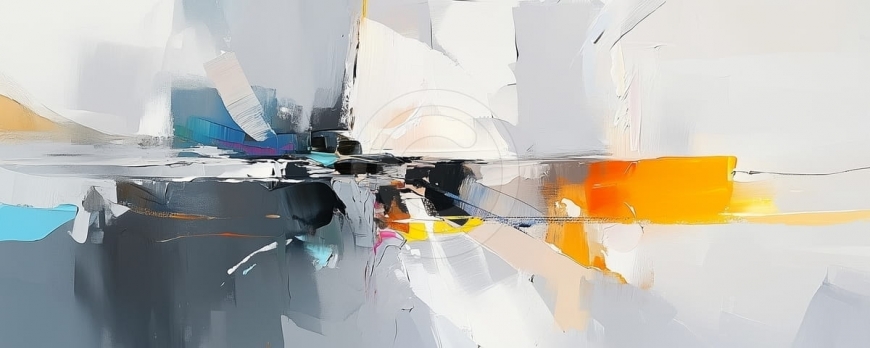
Large Abstract Paintings for Living Room: The Ultimate Guide to Transforming Your Space
Introduction: The Power of Going Large
There is a moment that every interior designer knows well — the moment when a large painting goes up on a wall and the entire room clicks into place. Scale changes everything. A painting that commands a wall doesn't just decorate a space; it defines it.
In living rooms across Europe and beyond, large abstract paintings have become the go-to solution for homeowners who want their space to feel intentional, sophisticated, and genuinely personal. Unlike a collection of small prints or a gallery wall that demands constant curation, a single large abstract canvas makes a statement with confidence and clarity.
But choosing a large abstract painting is not as simple as picking the biggest canvas you can find. The right piece must work with your room's proportions, complement your color palette, speak to your personal taste, and — most importantly — create the emotional atmosphere you want your living room to have.
This ultimate guide covers every aspect of the process: what makes a large abstract painting work in a living room, how to choose the right style and color, exact sizing and placement guidelines, the most important questions to ask before buying, and a comprehensive list of the best places to purchase large abstract art — including specialized online galleries like PastelBrush.com and GalleryToday.com.


Why Large Abstract Art Works So Well in the Living Room
Before getting into the practical details, it's worth understanding why large-scale abstract paintings are so effective in residential spaces — and specifically in living rooms.
They Create an Instant Focal Point
Every well-designed room needs a focal point — a visual anchor that draws the eye and organizes the space. In rooms without a fireplace or dramatic architectural feature, a large abstract painting does this job brilliantly. It gives the eye somewhere to land, which makes the room feel composed and intentional rather than randomly assembled.
They Bring Color, Energy, and Personality
Large abstract paintings introduce color in a way that nothing else can. A painting is three-dimensional in a way that a painted wall is not — it has texture, layering, depth, and brushwork that catches light differently throughout the day. And because abstract art communicates through emotion and intuition rather than narrative, it allows you to bring genuine personality into a space without the room feeling like a museum.
They Make Rooms Feel Larger and More Dynamic
Counterintuitively, a large painting can actually make a room feel more spacious. A single oversized canvas on one wall draws attention outward and upward, expanding the perceived boundaries of the space. This is especially useful in open-plan living areas where you want to zone different areas without physical dividers.
They Work Across Every Interior Style
From the whitewashed minimalism of a Scandinavian apartment to the rich maximalism of a classical European drawing room, large abstract paintings have a chameleon-like ability to suit their surroundings when chosen with care. The key is selecting the right style, palette, and scale for the specific context.
Understanding Large-Scale Abstract Art: Styles and Movements
Large-format painting has its own history and logic. Some of the most significant movements in modern art specifically championed scale as an expressive tool.
Abstract Expressionism and the Case for Scale
The Abstract Expressionist painters of mid-20th century New York — Jackson Pollock, Mark Rothko, Franz Kline, Helen Frankenthaler — understood that scale was not incidental but essential. Rothko's enormous color field paintings were designed to envelop the viewer, to create an immersive emotional experience that small canvases simply cannot deliver. This legacy lives on in contemporary abstract painting, where large canvases remain the most powerful format.
Gestural and Painterly Abstraction
Gestural abstract paintings — those featuring visible, expressive brushwork, dynamic marks, and layers of paint that record the physical act of painting — are among the most popular large-format works for residential interiors. They bring energy and movement into a room, and their visible texture means they look different depending on the light and the viewing distance.
Geometric and Hard-Edge Abstraction
At the opposite end of the spectrum, geometric abstract paintings feature crisp edges, precise forms, and controlled color relationships. In large format, geometric abstracts have a graphic confidence that works brilliantly in contemporary and minimalist interiors. A large canvas featuring bold geometric shapes in a limited palette can feel both modern and timeless.
Color Field Painting
Color field abstracts — large areas of flat or softly gradated color — are among the most serene and sophisticated options for living room walls. In large format, they have a calming, almost meditative quality. A wide canvas in deep blue-grey, warm terracotta, or sage green can transform an ordinary wall into something that feels genuinely architectural.
Contemporary Textured Abstracts
Today's abstract painters frequently work with thick impasto techniques, incorporating palette knife work, texture mediums, sand, resin, and other materials into their canvases. In large format, these textured works become extraordinarily rich objects — pieces that reward close looking and bring a tactile quality to the room that flat reproductions can never replicate.
Choosing the Right Large Abstract Painting for Your Living Room
Step 1: Assess Your Wall and Space
Before looking at any paintings, start with your room. Ask yourself:
- What is the wall's dimensions? Measure the width and height of the wall or the section where you intend to hang the painting. Note any architectural interruptions — windows, doors, light switches, plugs.
- What furniture is in front of or near the wall? The painting must relate proportionally to the furniture beneath or beside it. A sofa, console table, or sideboard all affect what size and placement works best.
- What is the room's light situation? Natural and artificial light affect how paintings look. Dark rooms benefit from paintings with warm or light-reflecting colors; bright rooms can handle deeper, richer tones.
- What is the overall color palette of the room? You don't need the painting to "match," but it should work in dialogue with the room's existing tones.
Step 2: Decide on the Emotional Tone You Want
This is the most personal and often most neglected step. A living room is not just a visual composition — it is a space where you live, relax, entertain, and recover from the day. The painting you choose will contribute significantly to the emotional atmosphere of the room.
Ask yourself: do you want the room to feel calm and serene? Bold and energetic? Sophisticated and elegant? Warm and welcoming? Playful and creative? Your answer should directly guide your choice of abstract style, color temperature, and compositional energy.
Step 3: Choose Your Color Direction
Color is the single most important variable in large abstract paintings. At large scale, color has enormous impact — it will affect the perceived temperature, mood, and even the apparent size of the room.
Warm palettes (ochres, terracottas, burnt oranges, warm reds, golden yellows) create energy, warmth, and conviviality. They are excellent for rooms that feel cold or lacking in character.
Cool palettes (blues, blue-greens, greys, soft purples) promote calm, clarity, and sophistication. They are ideal for rooms where you want to create a sense of peace and spaciousness.
Neutral and earthy palettes (warm whites, taupes, beiges, browns, natural ochres) are extraordinarily versatile and suit the current trend toward natural, biophilic interiors. These are safe choices that rarely disappoint.
High-contrast palettes (black and white, navy and gold, charcoal and copper) bring drama and graphic power. In large format, these can be genuinely spectacular.
Step 4: Consider Texture and Medium
In large-format abstract paintings, texture becomes a major expressive element. A smooth, flat canvas reads differently from a heavily textured impasto surface. Consider:
- Smooth canvases are more graphic and contemporary, suiting modern and minimalist interiors.
- Textured surfaces add warmth, depth, and a handmade quality that reads beautifully in traditional, bohemian, and eclectic spaces.
- Mixed media (canvases incorporating metallic leaf, resin, collage elements) bring additional luxury and visual interest — particularly effective in elegant or maximalist rooms.
Step 5: Original vs. Print — Making the Right Investment Decision
For a large living room painting, this is a genuinely important decision.
Original large-format paintings are irreplaceable. They are unique objects made by a human hand, and they carry an authenticity and energy that reproductions simply cannot replicate. At large scale, the difference between an original and a print is even more apparent — you can see the brushwork, feel the texture, observe how the paint has been layered. Original paintings also appreciate in value over time, making them genuine investments for your home.
High-quality giclée prints on canvas offer an accessible entry point for buyers with budget constraints. At large scale, a quality giclée print on stretched canvas can look very impressive. However, the absence of texture and the replication of an existing work mean that it will never have the presence of an original.
Our recommendation: If your budget allows, always invest in an original for the living room's main wall. It is the single home décor purchase that will pay the most visible dividends in terms of the room's atmosphere and character.
Sizing Guide: Exactly How Large Should You Go?
One of the most common questions buyers ask is: how large is large enough? Here is a practical framework.
The Two-Thirds Rule for Above-Sofa Placement
The most common location for a large painting is above the sofa. The widely accepted guideline is that the artwork should span approximately two-thirds of the sofa's width.
| Sofa Width | Recommended Painting Width |
|---|---|
| 160 cm | 100–110 cm |
| 180 cm | 120–130 cm |
| 200 cm | 130–145 cm |
| 220 cm | 145–160 cm |
| 240 cm+ | 160–180 cm or diptych/triptych |
For very long sofas or open-plan walls, consider a diptych (two panels) or triptych (three panels) arrangement, which provides the width needed while keeping the composition manageable.
Accent and Feature Walls
When a painting is intended to dominate an accent wall rather than sit above furniture, you can — and should — go larger. For a wall of 3–4 metres in width, a single canvas of 150 × 100 cm or a set of coordinated panels spanning 200 cm or more will be far more effective than a smaller piece that gets lost on the wall.
Height Considerations
Large abstract paintings are most commonly produced in landscape (wider than tall), portrait (taller than wide), or square formats. For living rooms:
- Landscape format suits walls above sofas, consoles, and long pieces of furniture. The horizontal emphasis reinforces the room's sense of calm and width.
- Portrait format suits narrower walls, corridors adjacent to living areas, and spaces where vertical emphasis adds grandeur.
- Square format is extremely versatile and looks strong both as a single piece and in pairs.
Standard Large Painting Sizes to Look For
When shopping, the following canvas sizes are commonly considered "large" and work well in most living rooms:
- 100 × 70 cm — Large-medium; suits smaller living rooms
- 100 × 100 cm — Large square; very versatile
- 120 × 80 cm — A classic large landscape format
- 140 × 100 cm — Statement piece for most living rooms
- 150 × 100 cm — True large-format; excellent impact
- 160 × 120 cm and above — Oversized; maximum visual impact
Placement and Hanging: Getting It Right
Hanging Height
The center of any painting should hang at approximately 145–155 cm from the floor — roughly eye level for a standing adult. This is the standard used by galleries worldwide and applies equally in residential spaces.
When hanging above a sofa, ensure there is a gap of 15–25 cm between the top of the sofa backrest and the bottom of the canvas. Any closer and the painting will feel crowded; any further and it will look disconnected from the furniture.
The Leaning Canvas Trend
One of the most stylish current approaches to displaying large abstract art is simply leaning the canvas against the wall rather than hanging it. A large canvas propped against the wall — on the floor, on a console, or on a picture ledge — has a relaxed, gallery-inspired quality that feels both contemporary and confident.
This approach is particularly effective in minimalist and Scandinavian interiors and has the practical advantage of being easy to reposition and change.
Lighting Your Painting
Large abstract paintings deserve proper lighting. Picture lights (mounted on the wall or ceiling above the canvas) or adjustable track lighting can dramatically enhance the visual impact of a large painting by revealing its texture, deepening its colors, and making it a genuine focal point even in the evening.
Avoid placing paintings in direct sunlight, as UV light will fade pigments over time.
Pairing Large Abstract Paintings with Interior Elements
A large abstract painting does not exist in isolation — it lives in relationship with the furniture, textiles, and other objects around it.
With Neutral Walls
Large abstracts work best against neutral walls — white, off-white, light grey, or warm beige. A neutral backdrop allows the painting to be the color statement, which is exactly the right hierarchy in a well-designed room.
With Colored Walls
If your living room has a colored wall, choose a painting that either harmonizes with the wall color (using tones from the same family) or creates a deliberate contrast. A dark navy painting against a deep green wall, for example, can create a sumptuous, jewel-box effect.
With Furniture and Textiles
The painting should ideally pick up — or deliberately contrast with — at least one color present in the room's textiles, cushions, or upholstery. This creates a visual thread that makes the space feel cohesive.
With Other Art and Objects
If your living room has other art or decorative objects, the large abstract painting should be the dominant piece — the one that sets the tone. Smaller works, sculptures, and decorative objects should play supporting roles.
Where to Buy Large Abstract Paintings
Finding the right large abstract painting requires knowing where to look. Here is a comprehensive guide to the best sources.
1. PastelBrush.com
Best for: Original large-format handpainted abstracts, quality originals at accessible prices
PastelBrush.com is a dedicated online art gallery specializing in original handpainted abstract canvases. The collection includes a strong selection of large-format works in a wide range of styles — gestural abstracts, color field compositions, textured impasto works, and contemporary decorative pieces.
What distinguishes PastelBrush is its focus on original paintings rather than prints. Every piece is individually created by skilled artists on professional-grade stretched canvas, ensuring the quality and authenticity that large living room paintings demand. The gallery ships across Europe and offers works in multiple large standard sizes.
Why shop here: Original handpainted quality, large-format availability, European shipping, competitive pricing for originals.
2. GalleryToday.com
Best for: Wide catalog of contemporary large abstracts, decorative focus, multiple formats
GalleryToday.com offers one of the most extensive online catalogs of contemporary abstract paintings, with a particularly strong offering in large and extra-large format works. The gallery's focus on decorative art means that every piece is selected with the home environment in mind — works that are designed to live beautifully in real interiors rather than exist primarily as gallery art.
The catalog includes single canvases, diptychs, and triptychs, making it especially useful for buyers who need to fill wide walls or create coordinated multi-panel arrangements. Color and style filtering tools make it easy to find large abstracts that match specific interior requirements.
Why shop here: Extensive large-format catalog, multi-panel options, strong decorative focus, multiple styles and palettes.
3. Saatchi Art (saatchiart.com)
Best for: Investment-grade originals, emerging international artists, curated collections
Saatchi Art is one of the world's largest online fine art marketplaces, connecting buyers with tens of thousands of artists globally. The large abstract painting category is enormous, spanning every possible style from gestural expressionism to geometric precision.
Every original work comes with a certificate of authenticity, and the platform's curatorial team produces themed collections that can help buyers navigate the vast catalog. For buyers interested in art as investment as well as decoration, Saatchi Art offers genuine discovery opportunities — the chance to find significant artists at early-career prices.
Why shop here: Massive selection, global artists, investment potential, authentication guarantees.
4. Artsy (artsy.net)
Best for: Gallery-level works, established contemporary artists
Artsy aggregates inventory from hundreds of galleries and auction houses worldwide, giving buyers access to a very wide range of established contemporary abstract artists. Large-format works are well represented across the platform. Prices vary enormously — from emerging artists in the hundreds of euros to established names in the thousands — but the quality assurance provided by gallery partnership is very high.
Why shop here: Gallery-quality works, broad artist representation, strong curation.
5. Etsy (etsy.com)
Best for: Custom sizes, direct artist contact, independent studios
Etsy has become a significant marketplace for original abstract paintings, particularly from independent studios and individual artists. Many sellers offer made-to-order works in custom sizes — which is particularly useful when shopping for a very specific wall dimension that standard sizes don't quite fit.
Quality varies considerably, so review artist portfolios carefully, read customer feedback, and zoom into product photographs to assess surface quality and finish before purchasing.
Why shop here: Custom sizing options, direct artist relationships, wide price range, handmade originals.
6. Local and Regional Galleries
For buyers who want to see a large painting in person before committing — which is always a good idea for significant purchases — local and regional galleries offer something online platforms cannot: the real experience of standing in front of the work.
Many cities across Europe host regular open studio events, art fairs, and gallery exhibitions where you can discover talented local artists. Buying directly from an artist or a local gallery also often means you can commission a custom work — a painting made specifically for your wall, in your preferred colors and dimensions. This option delivers the most personal and satisfying result of all.
Caring for Your Large Abstract Painting
Large canvases require a little extra attention to ensure they remain in perfect condition over the years.
Hanging: Ensure large canvases are fixed to wall studs or appropriate wall anchors. A large canvas can be heavy — particularly if it incorporates thick impasto or mixed media elements — and must be hung securely.
Light protection: Keep paintings out of direct sunlight. UV light is the primary enemy of pigment longevity. Where necessary, use UV-filtering picture glass or UV-blocking window treatments.
Climate: Avoid hanging large canvases near heat sources (radiators, fireplaces) or in areas of high humidity. Stable temperature and humidity preserve both the canvas and the paint layers.
Cleaning: Dust the surface occasionally with a clean, soft-bristled brush. Never use water, solvents, or commercial cleaning products on a canvas surface without professional advice.
Varnishing: Many original paintings are varnished by the artist to protect the surface. If yours is not, consult with a professional conservator about whether varnishing would be appropriate.
Budget Guide for Large Abstract Paintings
Large-format original paintings represent a real investment, but there are excellent options at every price level.
| Budget | What You Can Expect |
|---|---|
| Under €150 | Large-format art prints on canvas, digital reproductions |
| €150 – €500 | Original large paintings from emerging artists, handpainted originals in standard large sizes |
| €500 – €1,500 | Quality large-format originals from skilled artists, textured and mixed media works |
| €1,500 – €5,000 | Works from established emerging artists, gallery-quality large originals |
| €5,000+ | Recognized contemporary artists, investment-grade large-format works |
For most homeowners decorating a living room, the €300–€1,000 range delivers outstanding results — genuine original paintings of excellent quality that will anchor the room with real presence and character.
Frequently Asked Questions
Can a large painting overwhelm a small living room? Not necessarily. In fact, one large painting often works better in a small room than several small ones, which can make the space feel cluttered. The key is choosing the right scale — fill the wall appropriately without crowding it, and ensure the painting's color palette contributes to the sense of spaciousness.
Should the frame match the painting style? Contemporary abstract paintings often look best unframed (gallery-wrapped canvases where the painting continues around the edges) or with a simple, thin natural wood or metal float frame. Heavy ornate frames tend to fight with abstract compositions rather than enhance them.
Is abstract art a good investment? Original abstract paintings by skilled artists appreciate in value over time, particularly works by artists whose careers develop and whose market grows. Buying from emerging artists early in their careers can represent excellent value.
How do I know if a painting is truly original? When buying from reputable galleries — including PastelBrush.com, GalleryToday.com, and established platforms like Saatchi Art — you can trust that originals are genuine. Always ask for a certificate of authenticity and, where possible, information about the artist and the work's provenance.
Conclusion: Invest in Scale, Transform Your Space
Of all the decisions you can make in decorating a living room, choosing a large abstract painting is one of the most transformative. Scale, color, texture, and composition working together on a single wall can change not just how a room looks but how it feels — the atmosphere, the energy, the sense of identity.
Don't settle for a painting that merely fills a space. Choose a work that commands it.
Whether you explore the curated original collections at PastelBrush.com and GalleryToday.com, discover a new talent on Saatchi Art, commission a custom work from a local artist, or find a hidden gem at a regional gallery, invest in something that speaks to you and does justice to the scale of the wall — and the life — you're decorating for.