

How to Select Wall Art for Your Dining Room
The dining room is more than a place to eat. It is a space for conversation, connection, and shared moments. The right wall art can change the room from a simple dining area into a stylish and welcoming space. With so many choices available, it is important to select artwork that matches your furniture, lighting, and overall style to create a balanced and personal look.


Choosing wall art for your dining room does not have to feel difficult. Think of it as the final touch that brings the whole room together. This guide offers clear advice on size, color, and style to help you choose artwork that improves the look and feel of your dining space.
Match the Art to Your Dining Room Style
Start by identifying your dining room’s current style. Whether it is modern, traditional, rustic, or eclectic, your artwork should feel like a natural extension of the room.
- Modern or minimalist rooms: Choose abstract art, geometric designs, or black-and-white photography. Simple colors and clean lines work best. A single large artwork often looks better than multiple small pieces.
- Traditional or formal rooms: Classic paintings, landscapes, or botanical prints are good options. Decorative frames can help match traditional furniture.
- Rustic or farmhouse rooms: Choose artwork with natural themes, countryside scenes, or vintage-inspired designs. Wooden frames or canvas prints often suit this style well.
- Eclectic or bohemian rooms: Mix different styles, colors, and subjects. A varied gallery wall can add personality and create an interesting focal point.
Choose the Right Size and Scale
A common decorating mistake is choosing artwork that is too small or too large. The size of your artwork should match the wall space and nearby furniture to create a balanced look.
The Two-Thirds Rule for Sideboards
If you hang artwork above a sideboard, buffet, or console table, follow the two-thirds rule. The artwork should be at least two-thirds the width of the furniture below it. For example, if your sideboard is 60 inches wide, choose artwork that is about 40 inches wide. This keeps the display visually balanced.
Sizing for a Large Empty Wall
For a large feature wall, choose artwork that covers about 50% to 75% of the wall space. Measure the wall and use these percentages to estimate the best size. A large artwork on a main wall can become a strong focal point in the dining room.


Hang Art at the Right Height
The center of your artwork should be at eye level, usually about 57 to 60 inches from the floor. This height is comfortable for viewing. When placing art above a sideboard, leave about 6 to 8 inches between the furniture and the bottom of the frame.
Use Color to Set the Mood
Color plays a big role in how your dining room feels. Artwork can either match your current color scheme or add contrast to create visual interest.
Matching Existing Colors
For a calm and coordinated look, choose art that includes colors already found in your rug, curtains, or table decor. Using similar tones helps keep the space visually unified.
Adding a Bold Accent
If your dining room uses neutral colors like gray, beige, or white, artwork is a great way to add color. A bold piece can bring energy and personality to the room. For example, deep blue or rich red artwork can stand out beautifully on a light-colored wall.


Popular Wall Art Options for Dining Rooms
You are not limited to a single painting. Different formats can change the look and feel of your dining room.
Large Statement Artwork
A single oversized artwork can define the room and draw immediate attention. Abstract art, landscapes, or large photography work well for creating a strong focal point.
Gallery Walls
A gallery wall lets you display multiple pieces as a single visual set. To keep it organized, use a consistent theme.
- Symmetrical grid: Use matching frames arranged evenly for a clean and formal look.
- Mixed layout: Combine different frame sizes and styles for a more relaxed and personal display. Keeping frame colors consistent helps maintain visual balance.
Diptychs and Triptychs
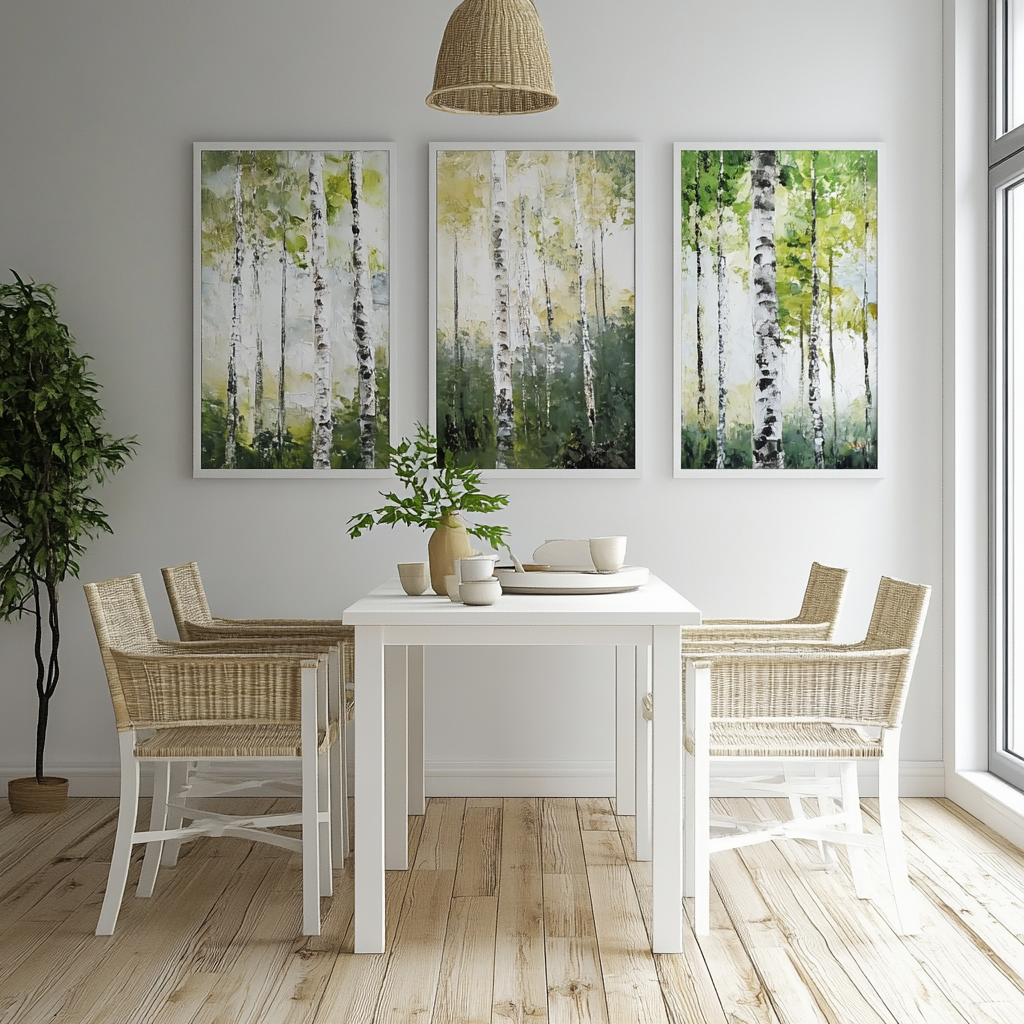
Artwork in two (diptych) or three (triptych) panels creates a modern and structured look. Apply the two-thirds rule to the total width of all panels combined, including the 2–4 inch gaps between them.


Framing and Lighting
The frame completes the artwork. Simple black or wood frames suit modern spaces, while decorative gold or silver frames work well in more classic interiors. Choose a frame that matches your dining room furniture.
Lighting also matters. A picture light, track lighting, or adjustable spotlights can highlight artwork and make it stand out, especially during evening meals.
Choose What You Love
Guidelines are helpful, but your personal taste is most important. Choose artwork that you truly enjoy. When you combine good design principles with your own style, you can create a dining room that feels both beautiful and personal.