

Beautiful Paintings: A Journey Through Art's Most Captivating Works
Standing in front of a beautiful painting can be a powerful experience. Time slows down, and the world around us fades. In that moment, we connect with something larger—a conversation between the artist and the viewer, between vision and feeling, between technique and expression.
Beautiful paintings can make us pause, reconsider, and feel deeply. But what makes a painting truly beautiful? Is it skill, emotion, history, or something hard to describe? The answer is complex and personal.


The Many Faces of Beauty in Art
Beauty in painting comes in many forms. Vermeer's calm interiors show beauty in quiet and detail. Turner's stormy seascapes show beauty in chaos. Frida Kahlo's portraits show beauty in honesty and emotion. Each approach highlights a different aspect of beauty.
Old Masters like Leonardo da Vinci and Raphael focused on harmony, proportion, and skill. Da Vinci's "Mona Lisa" is famous for subtle mastery—expression, perspective, and the sfumato technique that creates lifelike softness.
Baroque artists like Caravaggio used dramatic light and shadow (chiaroscuro) to create emotion. "The Calling of Saint Matthew" shows how light can create intense spiritual moments.
The Impressionists' Revolution of Light
Impressionists changed how beauty is seen. They highlighted brushwork and personal perception. Monet's water lilies capture light and color, not exact botanical shapes. Renoir's "Luncheon of the Boating Party" celebrates life and light. Monet's "Impression, Sunrise" shows beauty in fleeting moments of light.
Post-Impressionism: Beauty Becomes Personal
Post-Impressionists expressed inner visions. Van Gogh's "The Starry Night" shows emotional movement in the night sky. Gauguin's Tahiti paintings use bold colors and simplified shapes. Seurat's pointillism in "A Sunday Afternoon on the Island of La Grande Jatte" creates shimmering effects from tiny dots of color.
The Birth of Abstraction
Kandinsky's abstract paintings use color and form like music. Mondrian's geometric works, like "Broadway Boogie Woogie," show beauty in simplicity. Rothko's color fields create immersive emotional experiences.


Contemporary Visions of Beauty
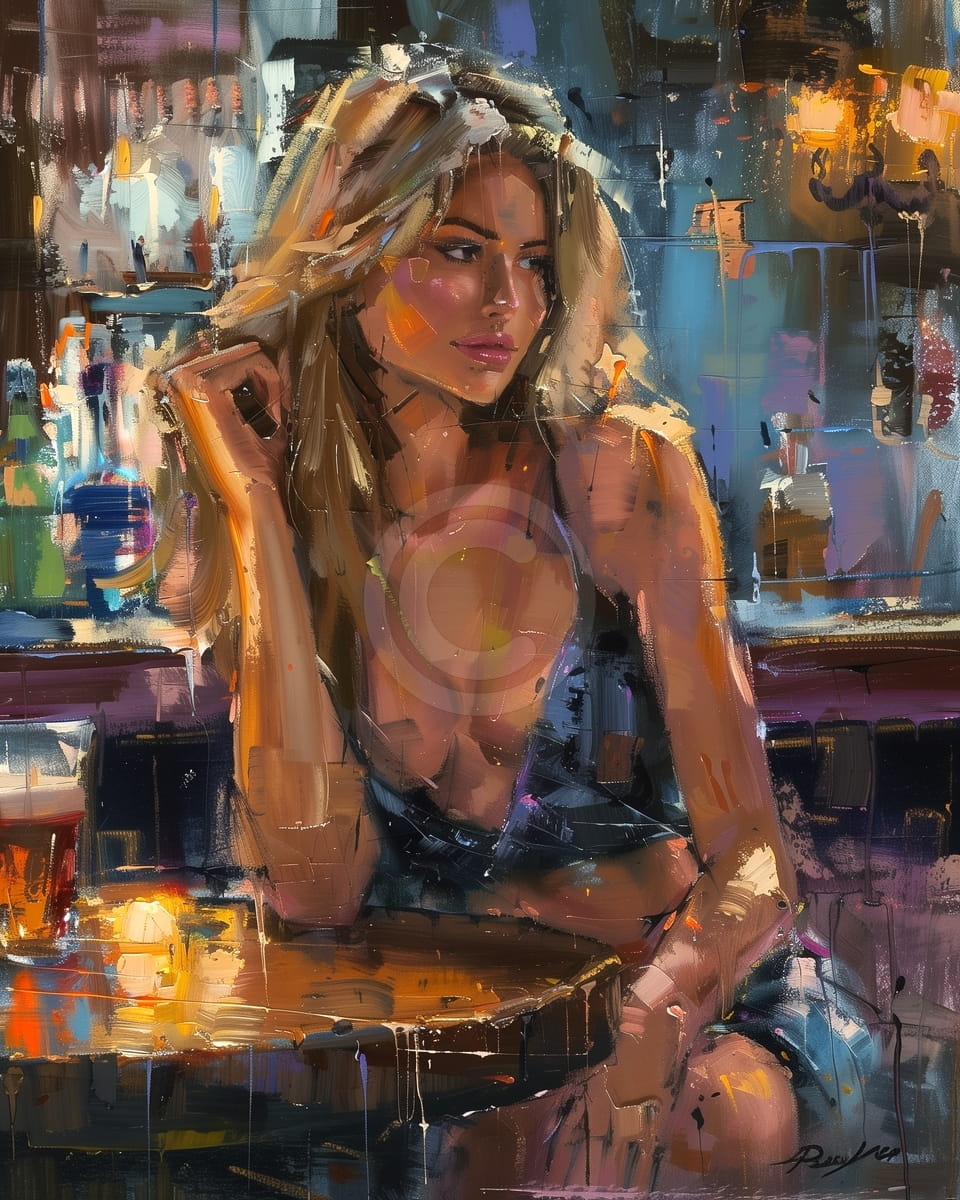
Modern painters explore many styles. Gerhard Richter mixes photorealism and abstraction. Kehinde Wiley paints contemporary subjects in Old Master poses. Jenny Saville shows realistic human forms in powerful ways. These works combine technical skill with new ideas.
The Technical Foundations of Beauty
Beautiful paintings rely on craft: color, composition, perspective, and paint techniques. Vermeer used optics and expensive pigments for luminosity. Composition guides the viewer's eye. Velázquez's "Las Meninas" creates complex visual puzzles. Rembrandt's thick paint creates lifelike texture, while Pre-Raphaelites used fine detail for jewel-like surfaces.
Emotional Landscapes
Landscape painting explores nature and emotion. Turner's late seascapes show sublime power. The Hudson River School captured detailed American wilderness. Chinese landscapes use empty space and mist to create calm, contemplative beauty.
Portraiture: Beauty in the Human Face
Portraits balance truth and beauty. Sargent's portraits capture personality and elegance. Rembrandt's self-portraits show aging and human experience in honest, moving ways.
The Role of Subject Matter
Sometimes beauty comes from what is shown. Dutch Golden Age genre scenes, like Vermeer's "The Milkmaid," make everyday life extraordinary. Still life paintings, like Juan Sánchez Cotán's works, show beauty in objects and remind us of life's transience.


Beauty and Innovation
Technical innovation also shapes beauty. Jan van Eyck's oil painting enabled fine detail and light effects. Paint tubes let Impressionists paint outdoors. Contemporary artists like David Hockney and Anselm Kiefer explore new materials and methods.
Cultural Contexts of Beauty
Different cultures define beauty differently. Japanese ukiyo-e influenced Western art. Islamic geometric patterns and Persian miniatures show another form of painted beauty. Indigenous Australian dot paintings combine beauty with cultural meaning.
The Mystery of Beauty
Beautiful paintings cannot be fully explained. They combine technique, color, and culture with something mysterious. They let us see through another person's eyes and invite contemplation in a fast-moving world.
A Living Tradition
Painting continues to evolve. Contemporary artists engage with centuries of tradition while exploring new ideas. Museums offer the chance to experience paintings in person, seeing scale, texture, and color that reproductions cannot capture.


The Future of Beautiful Painting
Painting will continue as long as people see and create. New technologies and perspectives will shape it, but the core desire remains: to show our vision to others. Beautiful paintings are enduring messages that connect people across time.
Standing before a painting, we share the artist's vision and experience beauty directly. Paintings remind us that humans can create extraordinary works, transforming matter into meaning. They teach us to see and, in doing so, teach us to be more fully human.