
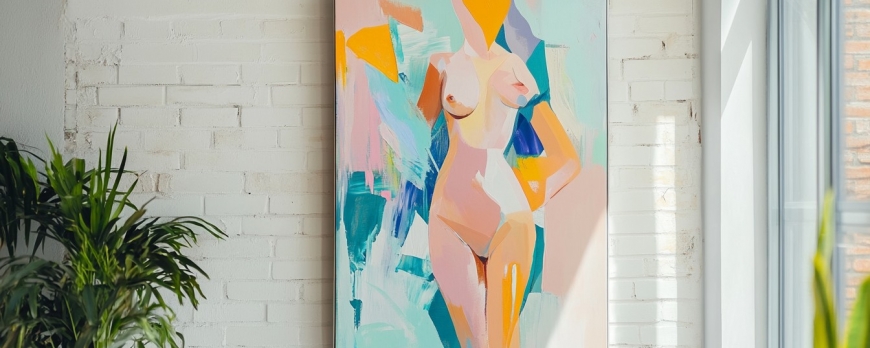
Beautiful Nude Paintings: A Modern Interpretation of the Human Form
The human body has been one of the most enduring subjects in the history of art. Long before modern painting transformed the way artists looked at the world, the nude figure was already being used to explore beauty, proportion, movement and emotion. Yet the way artists represent the body has never remained fixed. Every generation has found a different way to look at the human form, and modern painting has perhaps offered the greatest freedom of all.
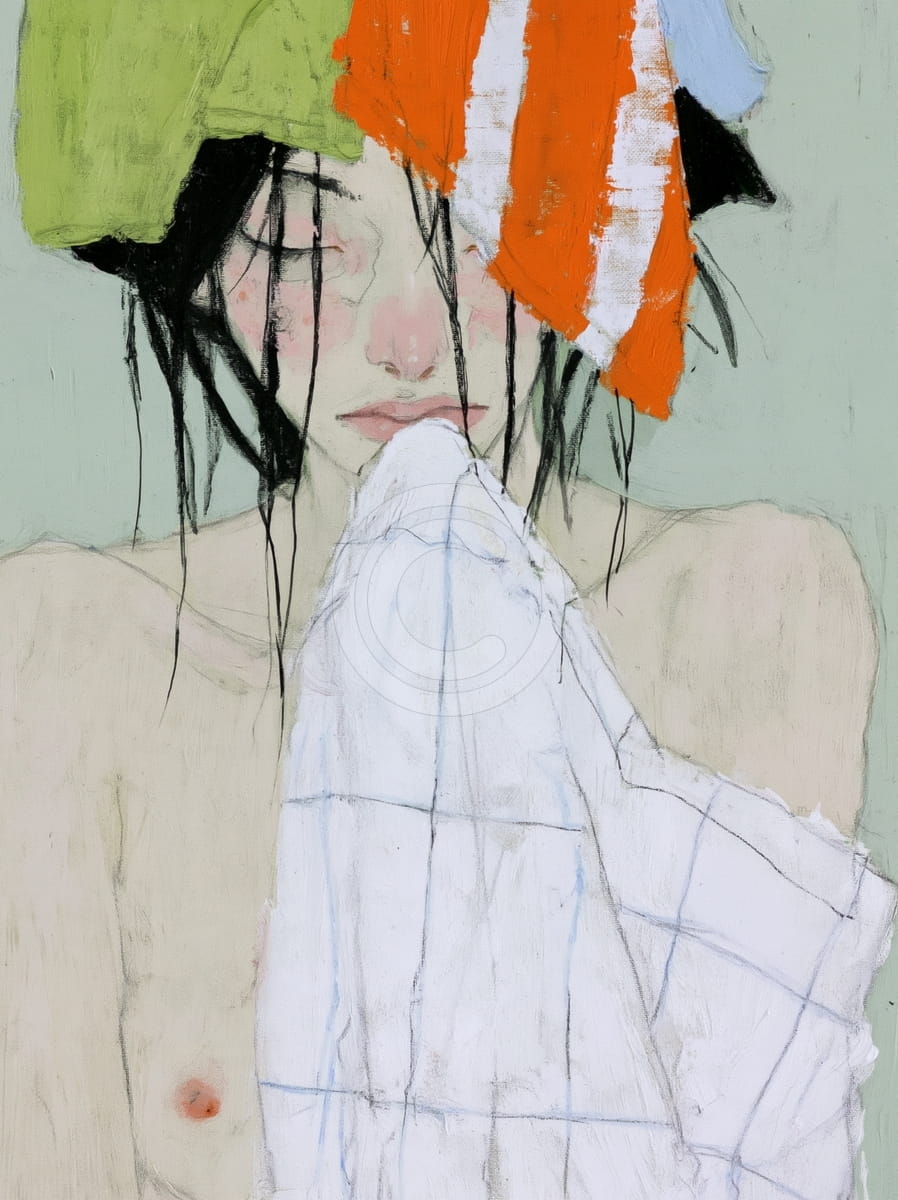
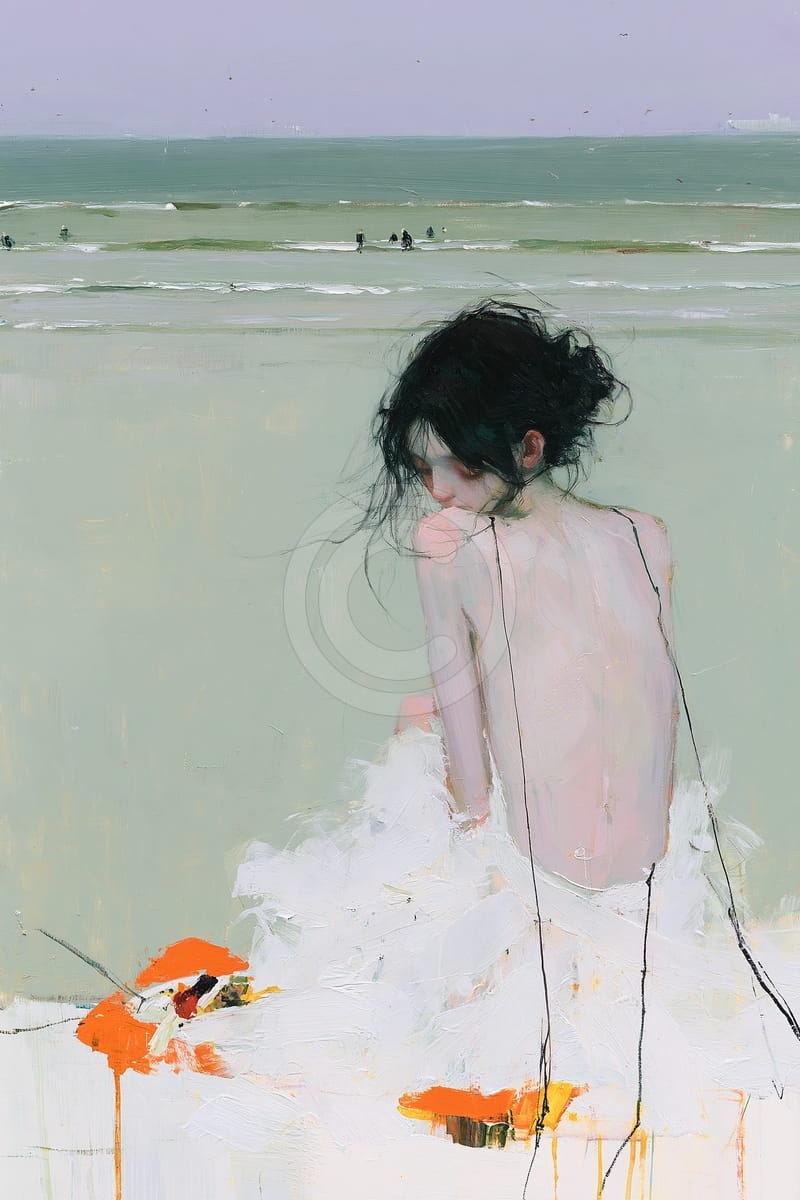
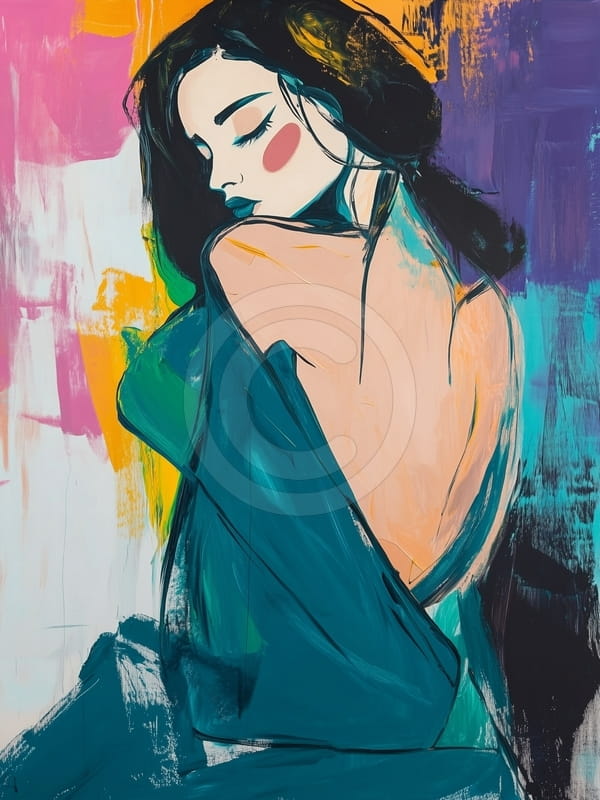
Today, a beautiful nude painting does not necessarily attempt to reproduce the body exactly as it appears in reality. Instead, the figure may be simplified, elongated, fragmented or reduced to a combination of lines and colors. The artist may leave parts of the body undefined, allowing the viewer to reconstruct the figure in their imagination. In this sense, the modern nude is often less about physical perfection and more about presence, balance, gesture and atmosphere.
This change reflects something fundamental about modern art. The artist is no longer required to show us exactly what the eye sees. A painting can suggest rather than describe, and the human figure can become a starting point for exploring much larger ideas about beauty, identity, movement and emotion.

From Classical Beauty to Modern Expression
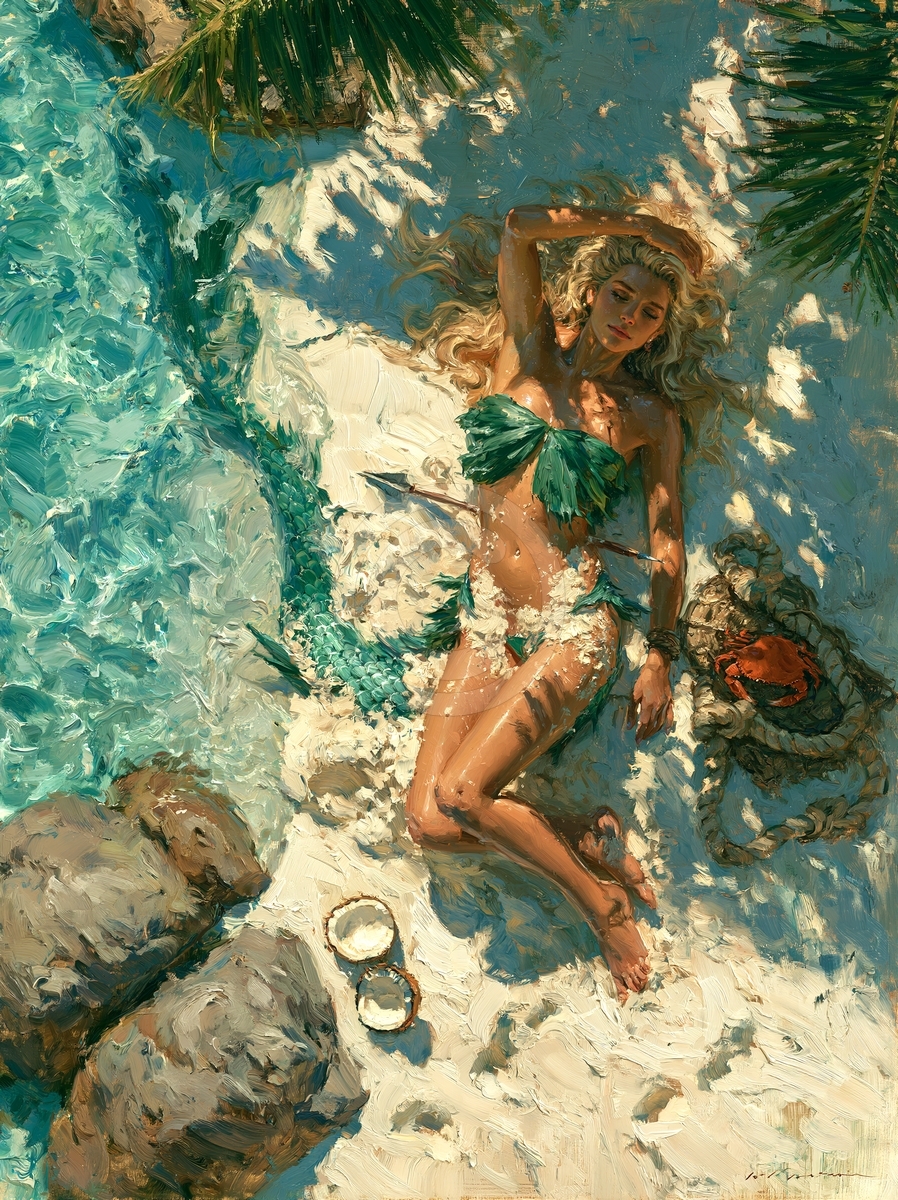
For centuries, the nude was closely associated with ideals of beauty. Classical Greek and Roman sculpture established conventions of proportion and harmony that continued to influence European art for generations. During the Renaissance, artists returned to these traditions with renewed enthusiasm, studying anatomy and perspective in an attempt to understand the body more precisely.
But the history of the nude was never simply a search for physical perfection. Artists used the human figure to communicate strength, vulnerability, spirituality, movement and emotion. The body could represent an ideal, but it could also tell a story.
By the nineteenth century, artists were increasingly willing to challenge established conventions. Édouard Manet's Olympia, for example, caused controversy not because the nude figure itself was new, but because Manet presented the subject in a deliberately modern context. The painting helped demonstrate that the nude could be reconsidered according to the realities of contemporary life rather than being confined to historical or mythological settings.
Modern art would take this process much further. Once artists began questioning traditional ideas of perspective, realism and representation, the human body became something that could be transformed rather than simply copied.
The Beauty of Simplification
One of the most appealing characteristics of modern nude paintings is their ability to communicate the figure with surprisingly few elements. A curved line may be enough to suggest a shoulder. A change in color can indicate the relationship between the body and the surrounding space. A darker shape may suggest a leg, a torso or a shadow without describing its anatomy in detail.
This simplification does not necessarily make the subject less beautiful. In many cases, it allows the viewer to concentrate on the essential qualities of the figure. Instead of noticing individual anatomical details, we become aware of posture, movement and rhythm.
This is where modern interpretations can become particularly elegant. A figure sitting quietly, standing beside a window or reclining against a neutral background can be reduced to a composition of flowing shapes. The painting begins to operate almost like a piece of visual music, with curves, spaces and colors creating a sense of balance.
The viewer does not need to understand every line. The overall impression is what matters.
Color as a Way of Seeing the Body
Modern artists have also discovered that the human figure does not need to be represented using natural skin tones. Color can become an emotional or compositional decision rather than a realistic one.
A figure might appear in warm terracotta, ochre and rose, surrounded by deep blue. Another painting may use muted beige and grey to create a quiet, almost monochromatic atmosphere. A more expressive work might introduce unexpected greens, reds or violets, turning the body into part of a larger abstract composition.
This freedom changes the relationship between figure and background. In traditional portraiture or academic painting, the background often exists primarily to support the subject. In modern art, the two can become inseparable. The figure may merge with surrounding shapes, disappear into blocks of color or emerge gradually from an abstract environment.
As a result, the painting becomes less concerned with where the body ends and the surrounding world begins.
The Importance of Gesture
Perhaps the most powerful element in a modern nude painting is gesture. Before we recognize the details of a figure, we often recognize its posture.
A slight turn of the shoulders can communicate movement. The angle of a head can suggest contemplation. A curved back can create a feeling of relaxation, while an elongated pose can introduce elegance and rhythm into the composition.
Artists working with the nude therefore often concentrate on gesture rather than anatomical precision. The figure becomes almost a line moving through space.
This approach has strong connections with drawing. A quick life drawing can capture the character of a pose in only a few strokes, and many modern paintings preserve this quality. The visible brushwork can make the artwork feel spontaneous and immediate, as though the artist is responding to the figure rather than constructing it according to a rigid formula.
That sense of movement is one reason contemporary figurative paintings can feel so alive even when the subject itself is completely still.
When the Figure Becomes Almost Abstract
The boundary between figurative and abstract art becomes particularly interesting when artists begin to simplify the human body.
At first glance, a modern painting may appear to be an abstract composition of geometric shapes. Then the viewer notices a familiar curve, the suggestion of a face or the outline of a seated figure. Recognition happens gradually.
This ambiguity gives the viewer an active role. Instead of being told exactly what to see, we are invited to discover the figure within the composition.
Cubism was particularly influential in changing the way artists thought about the body. Rather than presenting a single fixed viewpoint, artists could break the figure into multiple planes and perspectives. Later artists went even further, reducing the human form to increasingly simplified arrangements of shape and color.
Contemporary nude paintings continue this tradition in many different ways. Some retain enough detail to make the subject immediately recognizable, while others approach complete abstraction. Between these extremes is an enormous range of possibilities.
Light, Shadow and the Quiet Nude
Not every modern nude painting needs strong colors or dramatic compositions. Some of the most beautiful works are built around light.
A figure illuminated by a large window can become a study in subtle transitions between brightness and shadow. The body may be only partially visible, with some areas disappearing into the surrounding darkness. Instead of revealing everything, the artist allows light to determine what the viewer notices.
This approach creates a sense of intimacy without requiring theatricality. The figure can appear absorbed in a private moment, resting, thinking or simply existing within the space of the painting.
Soft light also works particularly well in contemporary interiors. A painting with muted neutral tones, warm beige, charcoal and subtle earth colors can introduce sophistication without overwhelming the surrounding furniture. In a bedroom, reading area or quiet living space, such artwork can create a contemplative atmosphere.
The beauty comes from restraint.
Modern Nude Paintings in Contemporary Interiors
The modern interpretation of the nude has made figurative artwork surprisingly versatile in interior design. Because contemporary artists can simplify the figure and experiment with color, these paintings can work within many different decorating styles.
A minimalist interior may benefit from a line-based nude drawing with plenty of open space. A more colorful modern room might accommodate an expressive figurative painting with strong blocks of color. In a room dominated by natural materials, an artwork using earthy tones can reinforce the warmth of wood, linen and stone.
Large nude paintings can also create an elegant focal point above a sofa or console, particularly when the composition has enough negative space around the figure. Smaller works can be grouped with other pieces to create a more personal gallery arrangement.
The important thing is not to treat the painting simply as a decorative object. The human figure naturally attracts attention, so the artwork should have enough visual space to breathe.
Choosing a Beautiful Nude Painting
Choosing a nude painting is ultimately a question of what kind of presence you want the artwork to have in your home.
Some people are drawn to recognizable figurative paintings where the beauty of the human form remains clearly visible. Others prefer modern interpretations in which the body becomes part of an abstract composition. There are paintings that emphasize elegance and serenity, while others focus on movement, color or expressive brushwork.
The surrounding room can help determine the direction. A quiet, neutral interior may benefit from a restrained monochromatic figure, while a contemporary space with stronger colors could support something more expressive.
It is also worth paying attention to the emotional quality of the pose. A relaxed figure can make a room feel peaceful, whereas a dynamic composition can create energy. Sometimes the smallest detail—a gesture, a curve or the direction of a gaze—is enough to determine whether a painting feels calm, mysterious or powerful.
The right artwork is not necessarily the most detailed or technically impressive. It is the one that continues to hold your attention.
The Human Figure, Seen Differently
The enduring appeal of the nude in art comes from its extraordinary simplicity. Artists have been looking at the human body for centuries, yet there is still no single way to represent it.
Modern painting has made that freedom even greater. The body can be realistic or abstract, precise or gestural, recognizable or almost completely dissolved into color. It can become a study of light, a composition of curves, an exploration of movement or simply an expression of beauty.
Perhaps the most interesting aspect of the modern nude is that it does not ask us to look at the human form in only one way. Instead, it encourages us to notice what exists beyond anatomical detail: the rhythm of a pose, the relationship between figure and space, the warmth of color, the quietness of light and the emotional atmosphere created by a few carefully chosen shapes.
That is why beautiful nude paintings continue to feel relevant in contemporary art. The subject may be timeless, but the way we see it is always changing.