

Minimalist Paintings: The Beauty of Less
There is something deeply appealing about an empty room with just a few carefully chosen objects. A chair in the right place, a table with nothing unnecessary on it, soft natural light coming through a window and a single piece of artwork on an otherwise quiet wall can sometimes create a stronger impression than a room filled with decoration. Nothing seems to demand attention, yet everything feels intentional. This is the atmosphere that minimalist paintings can create when they become part of an interior.
Minimalism is often described as the art of simplicity, but simplicity does not necessarily mean emptiness. A minimalist painting may contain only a few shapes, a limited range of colors or a single recognizable form, yet those elements can carry considerable visual weight. Because there is so little competing for our attention, we become more aware of the space between objects, the subtle differences in color and the balance of the composition.
This is perhaps the most interesting thing about minimalist art. It asks us to slow down.
In a world filled with images, advertisements, notifications and constant visual stimulation, a painting that does not try to tell us everything at once can feel surprisingly refreshing. It gives the eye somewhere to rest while still offering enough detail to remain interesting.


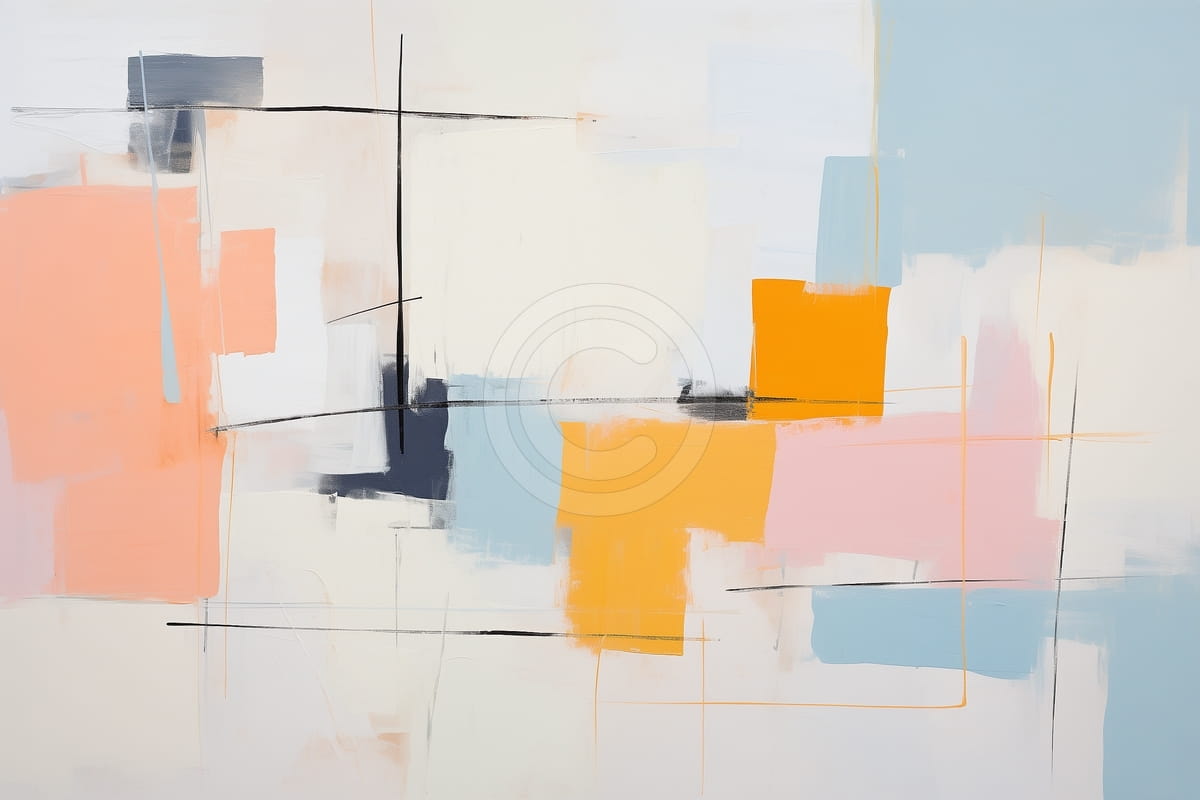


The Idea Behind Minimalism
The desire to simplify has existed in art for a very long time, but minimalism as a distinct artistic tendency developed particularly strongly during the twentieth century. Artists began questioning many of the assumptions that had governed painting for generations. Did a work of art need to represent a person or a landscape? Did it need an elaborate composition? Did it need to reveal the personality of the artist through expressive brushwork?
For some artists, the answer was increasingly no.
Minimalist artists explored repetition, geometric forms, simple structures and reduced color palettes. Instead of filling a canvas with information, they often focused on a small number of carefully considered elements. The resulting works could appear almost effortless, but their apparent simplicity often depended on a very precise understanding of proportion, space and balance.
This idea was part of a broader transformation in modern art. Artists were no longer necessarily trying to create an illusion of another world on the canvas. They were increasingly interested in the physical presence of the artwork itself: its surface, scale, shape and relationship with the surrounding space.
The result was an entirely different way of thinking about what a painting could be.
A minimalist painting does not necessarily ask us to discover a hidden story. Instead, it encourages us to pay attention to what is already there.
When Less Becomes More
The phrase “less is more” is often associated with modern architecture and design, but it also describes something fundamental about minimalist art. When there are fewer elements in a composition, each one becomes more important.
A single dark shape against a pale background can have an extraordinary presence. A thin line can become the central focus of an entire composition. A subtle variation between two similar shades of beige or grey may suddenly become noticeable because there are no stronger colors competing with it.
This is why minimalist paintings can be much more demanding than they initially appear. When an artist has only a few elements to work with, there is nowhere for mistakes to hide. The position of a shape, the amount of empty space surrounding it and the relationship between two colors can determine the entire character of the work.
The viewer may not consciously analyze these decisions, but we respond to them. We sense when a composition feels balanced and when something feels unnecessarily crowded. We notice when a large area of empty space creates calm and when a single contrasting element gives the painting tension.
Minimalist art therefore demonstrates that simplicity and sophistication are not opposites. In many cases, simplicity is the result of careful decisions rather than a lack of ideas.
The Importance of Empty Space
One of the most beautiful aspects of minimalist painting is the role of empty space.
In many other forms of art, empty areas of a canvas might be treated simply as background. In minimalist compositions, however, space can become almost as important as the objects themselves. A large area of untouched or softly colored canvas can create distance around a central form, allowing that form to breathe.
This has an interesting effect on the viewer. We are used to looking for information, but minimalist art gives us permission not to search for something hidden. The empty areas become part of the experience.
This is one reason minimalist paintings can feel particularly peaceful in a home. They do not constantly compete with the furniture, lighting or other decorative objects. Instead, they can create a visual pause within the room.
Imagine a contemporary living room with clean architectural lines and neutral furniture. A heavily detailed painting might introduce too much visual activity, while a simple abstract composition with generous areas of space can complement the room without overwhelming it. The artwork remains present, but it does not make the interior feel crowded.
The same principle can work in a bedroom, hallway or workspace. Sometimes the wall does not need another loud statement. It needs something that gives the space a sense of completion.
Minimalist Painting and Modern Interiors
The connection between minimalism in art and modern interior design is natural because both are interested in the relationship between objects and space.
Contemporary interiors often use clean lines, restrained colors and relatively simple furniture. A minimalist painting can continue that visual language on the wall, creating a sense of continuity between architecture, furniture and artwork. But it can also introduce a subtle contrast.
A minimalist interior does not necessarily require minimalist artwork. In fact, one of the most interesting approaches is to place a simple painting in a room where the surrounding materials provide texture and warmth. A neutral abstract work can complement wood, stone and natural fabrics, while a geometric composition can echo the architectural lines of the room.
Color can be used just as carefully. A predominantly white, cream or grey interior may benefit from a minimalist painting containing one carefully chosen accent color. Rather than introducing a large burst of decoration, that single color can provide just enough contrast to make the room feel more alive.
The artwork does not need to match the room exactly. It needs to belong to it.
This distinction is important. When every element in an interior is matched too precisely, the result can feel manufactured. A minimalist painting can provide a quieter form of personality, allowing the room to remain simple without becoming impersonal.
Why Minimalist Art Feels Calm
The emotional effect of minimalist art is difficult to separate from the environment in which we experience it. A painting with a limited palette, balanced forms and plenty of open space can create a sense of calm because our eyes are not required to process a large amount of information.
This does not mean every minimalist painting is peaceful. Some use strong contrasts, sharp geometric forms or unexpected compositions to create tension. Others may feel almost architectural, formal and precise. The important thing is that the painting controls its visual information carefully.
This can make minimalist art especially appealing in spaces where people want to relax. A bedroom, reading corner or quiet home office can benefit from artwork that does not constantly demand attention.
There is also something psychologically comforting about repetition and order. Balanced shapes and consistent lines can give us a sense of stability, while asymmetry can introduce enough variation to prevent the composition from feeling static.
The most successful minimalist paintings often achieve a delicate balance between these two qualities. There is enough order to create harmony, but enough irregularity to keep the artwork alive.
Minimalism Does Not Mean Cold
One of the common misconceptions about minimalist art is that it must be cold, severe or completely devoid of emotion. In reality, minimalist paintings can be remarkably warm.
Soft earth tones, muted greens, warm whites, pale pinks and gentle blues can create a very different atmosphere from the stark black-and-white compositions that are often associated with minimalism. Organic shapes can make a painting feel softer, while subtle textures can introduce a sense of depth and materiality.
Even a simple image of a branch, flower, face or landscape can be reduced to a few essential shapes without losing its emotional character.
This is where minimalist painting becomes particularly versatile. It can exist between abstraction and representation. A recognizable object may be simplified until only its essential characteristics remain. We might still recognize a flower, a human figure or a distant horizon, but the artist has removed everything that is not necessary.
What remains is often surprisingly powerful.
The painting does not tell us every detail about the subject. Instead, it gives us just enough information for our imagination to complete the rest.
The Appeal of Simple Colors
Minimalist paintings often depend heavily on color because there are fewer visual elements available to create variation. A carefully chosen palette can therefore determine the entire mood of the work.
Neutral colors can create a sophisticated and understated atmosphere. Beige, cream, taupe, grey and soft brown can work particularly well in contemporary interiors because they interact naturally with wood, stone and other neutral materials.
Black and white create stronger contrast and can give a minimalist painting a more graphic character. These combinations often work well in modern spaces where architectural lines and simple furniture are already prominent.
Soft colors can create an entirely different feeling. Pale blues and greens can suggest nature and tranquility, while muted terracotta, ochre or dusty pink can introduce warmth without overwhelming the room.
The beauty of a restrained palette is that the painting can remain visually interesting without becoming dominant. This is particularly useful when the artwork is intended to complement rather than compete with other elements of an interior.
Choosing a Minimalist Painting for Your Home
Choosing minimalist art can sometimes be more difficult than choosing a highly detailed painting because there are fewer elements to distract you from the overall composition. You have to respond to the balance of the artwork itself.
Begin by thinking about the atmosphere you want to create. A painting with soft colors and organic forms can make a room feel relaxed and welcoming, while geometric shapes and stronger contrasts can give it a more contemporary and structured character.
Consider the wall as well. Minimalist artwork often benefits from space around it, so avoid placing it in an area where it will be surrounded by too many other objects. A relatively simple wall can allow the painting to have the visual breathing room it needs.
Size is also important. A small minimalist painting can create an intimate detail within a room, while a large composition can become a powerful architectural element. Because minimalist paintings often contain fewer visual elements, large scale can give those elements greater presence without making the artwork feel excessively busy.
Most importantly, choose something that continues to attract your attention even though it does not demand it. A minimalist painting may not produce an immediate dramatic reaction, but if you find yourself returning to it and noticing something new each time, it has probably found the right place in your home.
The Quiet Power of Minimalist Art
Minimalist painting represents an interesting contradiction. It can look simple while containing an extraordinary amount of thought. It can occupy an entire wall while using very little visual information. It can make a strong impression without being loud.
That quietness is perhaps its greatest strength.
At a time when interiors are often filled with objects and our daily lives are surrounded by visual stimulation, minimalist art offers another possibility. It reminds us that a room does not need to be full to feel complete, and that a painting does not need to explain everything in order to be meaningful.
A simple line, a carefully placed shape or a subtle combination of colors can be enough.
This is also why minimalist paintings work so naturally with contemporary homes. They leave room for architecture, furniture, natural light and everyday life. They become part of the environment rather than overwhelming it.
Ultimately, minimalist art is not really about having less for the sake of having less. It is about deciding what deserves our attention.
A minimalist painting removes the unnecessary so that we can notice what remains: the relationship between color and space, the balance of a composition, the quiet character of a room and perhaps even our own response to what we are seeing.
And sometimes, after a long day surrounded by noise and movement, that is exactly what we want from the art on our walls.