
Modern Landscape Paintings: Nature Through a Contemporary Eye
Modern Landscape Paintings: Nature Through a Contemporary Eye
There are landscapes that stay with us long after we have left them. Sometimes it is a mountain seen from a winding road, a field glowing under the evening sun, a forest disappearing into mist, or the quiet surface of a lake reflecting the sky. We may remember the place for years without remembering exactly why it affected us. Perhaps the light was unusual, perhaps the colors seemed deeper than they normally do, or perhaps we simply happened to be there at a moment when everything felt peaceful. Landscape has always had this ability to become connected with memory, and this is one of the reasons it has remained such an important subject in painting.
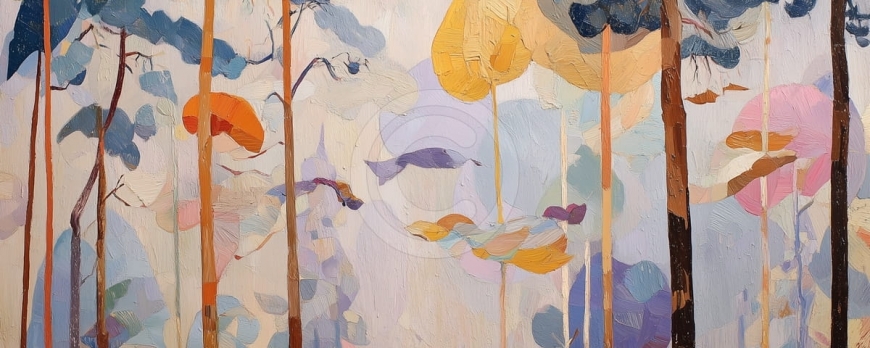
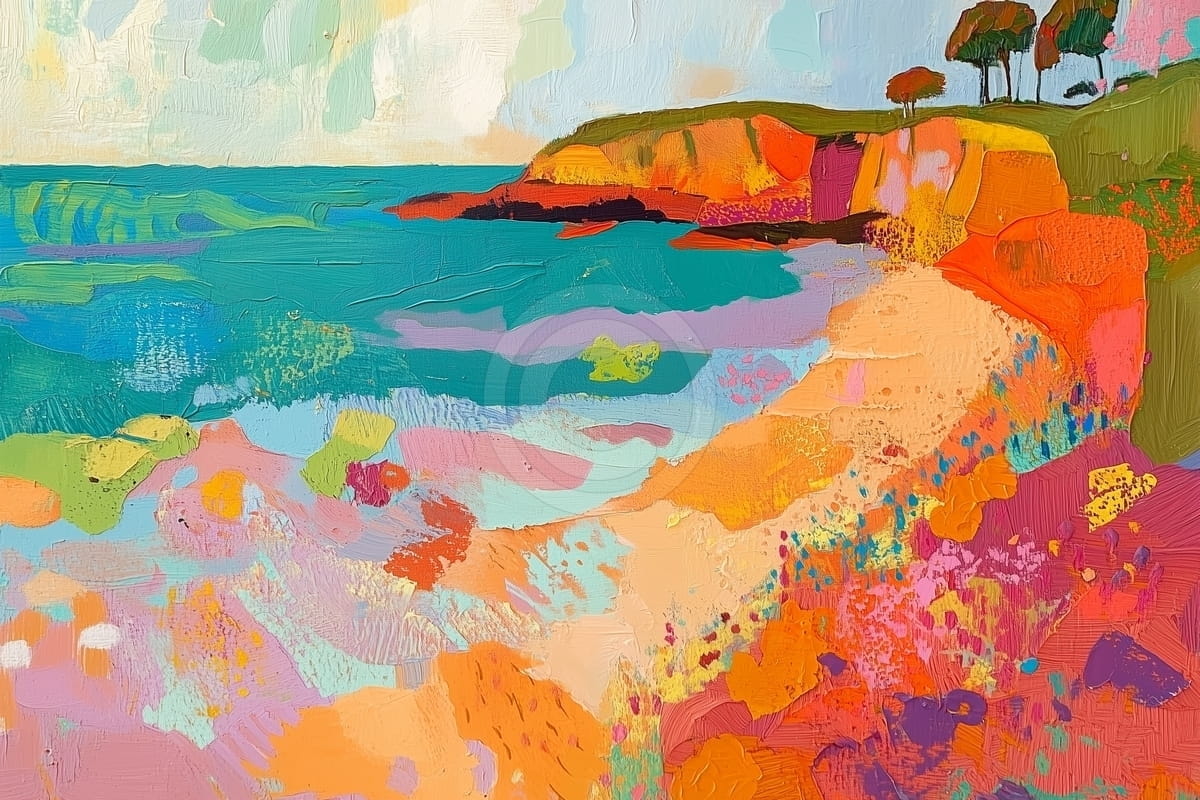
Modern landscape paintings take this familiar relationship with nature and give it a contemporary interpretation. The artist does not necessarily try to reproduce a particular view exactly as it appears in front of them. Instead, a landscape can become a way of expressing atmosphere, emotion, light and movement. Mountains may be simplified into broad shapes, trees may dissolve into layers of color, and a sky can become almost as important as the land beneath it. In some works the scenery remains clearly recognizable, while in others the landscape is transformed until it approaches abstraction.
What makes modern landscape art so appealing is precisely this freedom. It allows us to recognize the world we know while seeing it through someone else's imagination.



How Landscape Became a Modern Subject
It is easy to assume that landscape painting has always occupied a central position in Western art, but its history is more complicated. For centuries, landscape was often considered less important than subjects such as history, religion or portraiture. Nature could appear in a painting, but it frequently served as a setting for a more important human story.
That began to change during the nineteenth century. Artists increasingly became interested in observing nature directly rather than constructing idealized landscapes according to established artistic formulas. In France, painters associated with the Barbizon School turned their attention toward the countryside around them, working directly from nature and looking for the particular qualities of real light, weather and atmosphere. Later, the Impressionists pushed the idea even further, using landscape as a place to explore the experience of seeing itself.
This transformation was important because it changed the question an artist was asking. Instead of simply asking, “How can I paint this landscape accurately?”, the artist could ask, “What does this landscape feel like?”
That question opened an enormous door for modern art.
Claude Monet could return to the same subject repeatedly because the subject itself was only part of what interested him. Changing light, weather and time of day could completely alter the appearance of the scene. Cézanne would later push landscape toward a more structured interpretation, treating mountains, trees and other elements as forms that could be reorganized through painting. Landscape had become more than a picture of a place; it had become a laboratory for artistic ideas.
When Nature Becomes Color
One of the most distinctive qualities of modern landscape paintings is the way they use color. In a traditional realistic landscape, the artist may try to reproduce the natural colors of grass, trees, mountains and sky. A modern artist has much greater freedom.
A forest does not have to be entirely green. It might contain deep blues, warm ochres, muted reds and almost black shadows. A sunset may be intensified until the entire horizon seems to glow. Snow can be painted with lavender, pale blue or grey rather than simply white. Even the sky can become an emotional element, occupying much of the canvas and creating the atmosphere of the entire composition.
This is where modern landscape painting becomes particularly interesting for the viewer. We already know what a landscape looks like, so the artist does not need to give us every detail. Instead, color can tell us how the landscape feels.
A warm landscape filled with golden yellows and earthy tones can suggest the peacefulness of late summer, while cooler blues and greys can create a completely different sense of distance and solitude. Strong contrasts can make a landscape feel energetic and dramatic, whereas subtle variations in tone can create a quiet, almost meditative atmosphere.
The landscape therefore becomes more than an image of nature. It becomes an emotional space.
From Realistic Scenery to Abstraction
As modern art developed, artists increasingly questioned the idea that a painting had to look like the world in front of them. Landscape was one of the genres that made this change particularly visible because nature provides so many recognizable forms while also offering enormous freedom for interpretation.
A mountain, for example, has a recognizable shape, but an artist can reduce it to a triangle or a series of overlapping planes. Trees can become vertical strokes. A river can become a sweeping band of color crossing the composition. Clouds can be suggested through soft patches of paint rather than carefully drawn forms.
Eventually, the viewer may find themselves looking at a painting that is not really a representation of a specific place at all, yet still feels unmistakably connected to nature.
This movement between recognition and abstraction is one of the great pleasures of modern landscape art. We may initially see a forest, a coastline or a mountain range, but after spending time with the painting, our attention moves toward the composition itself. We begin to notice the relationship between colors, the direction of the brushstrokes and the way one shape balances another.
Modern artists working with nature have repeatedly used this approach. The Museum of Modern Art describes how twentieth-century artists could flatten foliage into patterns, turn water into stylized forms and transform light into something almost tangible.
The result is a landscape that exists somewhere between the real world and the artist's imagination.
Why We Are Drawn to Landscapes
There is a psychological reason landscape paintings have such a lasting place in our homes. Nature offers something that many modern interiors do not: a sense of space.
A room has walls, furniture and boundaries. A landscape opens outward. Even a relatively small painting of a distant mountain range or an open field can create the impression that the wall continues beyond the physical space of the room. The eye travels into the distance, following a road, river or horizon, and the room suddenly feels connected to somewhere beyond itself.
This may be particularly meaningful today because so much of everyday life takes place indoors and in increasingly urban environments. We spend our days surrounded by buildings, roads, screens and artificial light. A landscape painting introduces another kind of visual experience. It reminds us of open spaces, changing weather, natural light and places where the pace of life feels different.
This does not mean that the landscape has to be peaceful. Stormy skies, dramatic mountains and dark forests can create equally powerful interiors. What matters is that the artwork establishes a relationship with the space around it.
A modern landscape can therefore become both decoration and escape. We may never have visited the place depicted in the painting, but the image can still give us the feeling of having somewhere to look toward.
Modern Landscapes in Contemporary Interiors
The versatility of modern landscape paintings is another reason they work so well in contemporary homes. Unlike highly specific decorative objects, a landscape can adapt to many different interior styles.
A large panoramic landscape can become the focal point of a living room, particularly when placed above a sofa or a long console. A quieter composition with soft colors can create a relaxed atmosphere in a bedroom, while a dramatic mountain or forest scene can give a minimalist interior a stronger sense of character.
The artwork does not necessarily have to match every color in the room. In fact, contrast can often make the composition more interesting. A neutral interior can benefit from a landscape with warm earth tones, while a room dominated by warm colors might be balanced by cooler blues and greens.
Scale is equally important. A large landscape can create a feeling of openness and become almost architectural in its presence. Smaller works can feel more intimate, especially when grouped together or placed in quieter areas of the home.
What matters most is that the landscape contributes something to the atmosphere of the room. It should not simply fill an empty wall. It should give the eye somewhere to go and the imagination somewhere to wander.
The Landscape We Remember
Perhaps the most interesting thing about a landscape painting is that it does not have to represent a place we have actually visited. Sometimes the most meaningful landscapes are imaginary. A painting may remind us of the countryside where we grew up, a holiday spent near the sea, a road trip through the mountains, or simply an idea of nature that exists in our imagination.
This is why two people can look at exactly the same landscape and experience completely different things. One person might see a peaceful summer afternoon, while another sees loneliness, freedom or nostalgia. The painting remains the same, but the memories and emotions we bring to it change the experience.
Modern landscape painting leaves plenty of room for this personal response. Because the artist does not always define every detail, the viewer can complete part of the scene in their own mind. A hazy horizon can become a distant destination. An empty road can suggest a journey. A group of trees can evoke a place we remember, even if the trees themselves belong entirely to the artist's imagination.
In this way, landscape painting is never only about nature. It is also about our relationship with nature and with the memories we attach to it.
Bringing Nature Into Modern Art
Modern landscape paintings show how remarkably flexible the idea of landscape can be. What began as a relatively secondary subject in European academic painting eventually became one of the great sources of innovation in modern art. Artists used landscapes to experiment with light, color, brushwork, composition and eventually abstraction.
Yet despite all these artistic changes, the basic attraction remains surprisingly simple. We still enjoy looking at trees, mountains, water, fields and skies. We still respond to the changing colors of nature. We still remember places through the light that surrounded them.
The difference is that modern artists give us permission to see those things differently.
At PastelBrush, the Modern Landscape paintings collection brings together contemporary interpretations of nature designed for modern interiors. From atmospheric landscapes and colorful countryside scenes to more expressive and stylized compositions, these artworks explore the familiar world of nature through a more modern visual language.
A landscape painting can make a room feel larger, calmer, warmer or more expressive, but its real value goes beyond decoration. It gives us a view that does not require a window. It can take us somewhere quiet in the middle of a busy day, remind us of a place we once loved, or simply offer a few moments in which we stop looking at the world as something we are passing through and begin looking at it again.
Perhaps that is why landscape painting has survived so many changes in art. Styles have changed, techniques have changed and the way artists understand nature has changed, but our fascination with the horizon remains. We continue to look at distant mountains, open fields and changing skies, searching for something that is difficult to describe but immediately recognizable: the feeling of being somewhere else.
A modern landscape painting captures that feeling and brings it home.