

Japanese-Inspired Wall Art for the Living Room: The Art of Knowing What to Leave Out
Most artistic traditions accumulate detail over time — more realism, more texture, more information packed into the frame. Japanese art moved in the opposite direction, and that's exactly what makes it feel so strikingly modern centuries later. Flat color instead of modeled shading. A single decisive line instead of a dozen tentative ones. Empty space treated as just as meaningful as filled space. Japanese-inspired wall art doesn't try to show you everything — it shows you the one thing that matters, and trusts you to feel the rest.
This article looks at what makes Japanese-inspired canvas art such a distinct and enduring category, the different visual traditions it draws from, and how to choose and place a piece in your own living room.


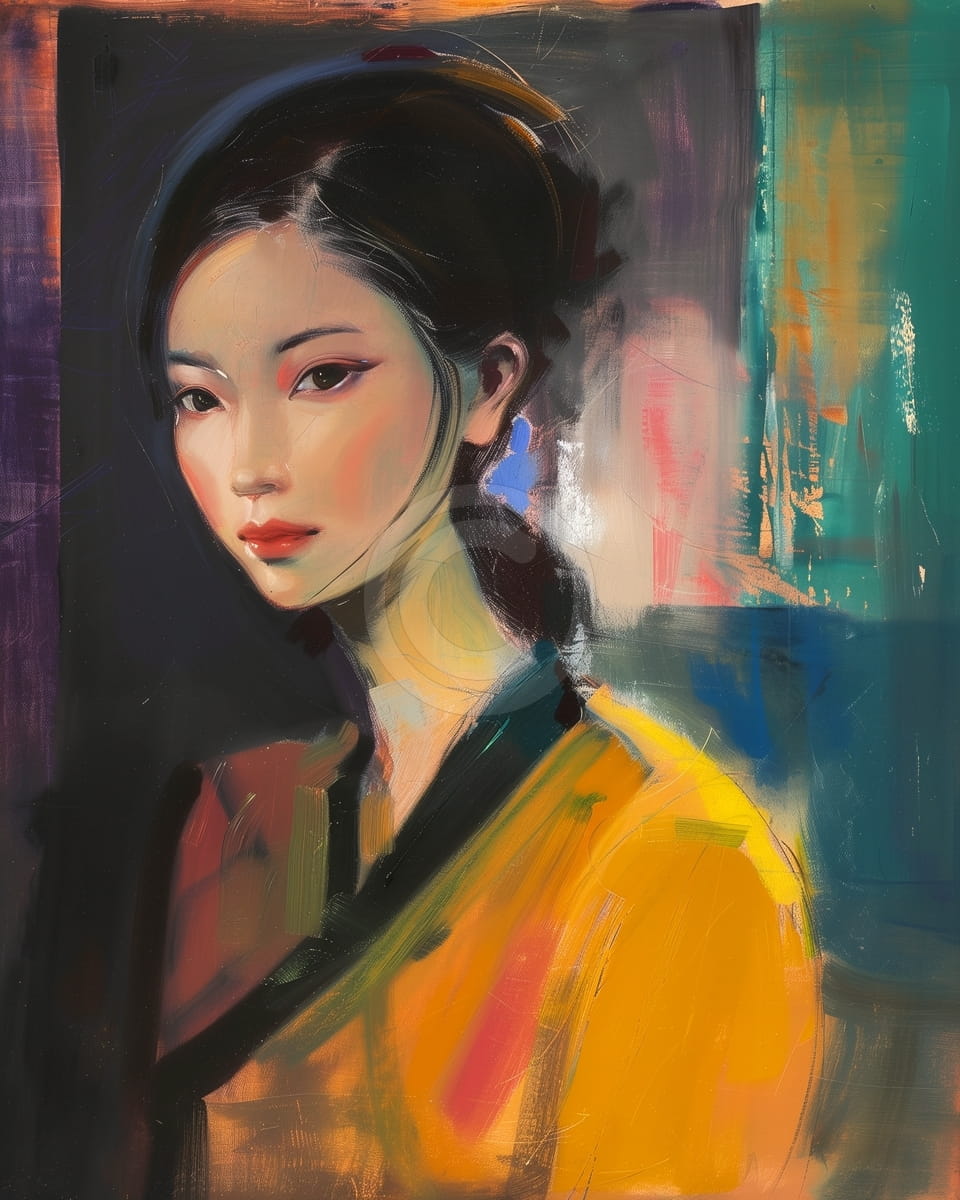

A Different Relationship With Empty Space
The single biggest difference between Japanese-inspired wall art and most Western traditions is how it treats the parts of the composition that aren't doing anything. In a lot of Western painting, empty space reads as unfinished — something to be filled with more detail, more background, more justification. In Japanese art, empty space (often called ma) is doing real compositional work. It gives the eye somewhere to rest, it creates breathing room around the subject, and it often carries as much emotional weight as the subject itself.
This is part of why Japanese-inspired pieces tend to feel so calming on a living room wall. A piece like Resting in Japanese Garden doesn't crowd its subject — the figure sits within generous, quiet space rather than being boxed in by background detail, and that restraint is precisely what gives the piece its sense of stillness. Where a busier composition might compete for attention with the rest of a room, this kind of deliberate emptiness lets the piece sit comfortably without dominating.
The Many Traditions Within Japanese-Inspired Art
"Japanese-inspired" covers a surprisingly wide range of subjects and visual approaches, and recognizing the differences helps in choosing wall art that fits a specific living room mood.
Nature studies — cherry blossoms, cranes in flight, koi in deep water, bamboo bending in wind — focus on a single natural subject rendered with extraordinary economy of line. These pieces draw on the centuries-old tradition of Japanese printmaking, where every stroke had to earn its place because there was no room for anything decorative or excessive. A piece like Japanese Village Canal, with its quiet water and restrained palette, sits in this tradition — a scene built from a handful of essential elements rather than dense detail, letting atmosphere do the work that clutter would otherwise have to do.
Geisha portraits form their own substantial category within Japanese-inspired wall art, and they work as a study in formality and grace as much as a portrait of an individual. The elaborate hair, the white makeup, the structured kimono — all of it is ceremonial, and a well-rendered geisha piece captures that sense of ritual and composure rather than treating the figure as a casual subject. A piece like Geisha with Red Sun and Floral Kimono leans into this — a bold red sun and floral pattern set against the geisha's composed expression, balancing decorative richness with stillness in a way that's distinctly different from a typical Western portrait.
Landscape subjects — Mount Fuji rendered across different seasons and qualities of light, misty hillsides, quiet villages — apply the same economy of detail to the natural world rather than to a figure. These pieces tend to read as meditative rather than dramatic, prioritizing mood and atmosphere over topographic accuracy.
Choosing between these isn't really about which subject appeals to you in isolation — it's about whether you want a living room wall that draws the eye toward a human presence (geisha portraits), toward nature distilled to its essentials (nature studies), or toward a wide, contemplative view (landscape subjects). Each does something slightly different to a room's energy.
Why Japanese-Inspired Art Suits the Modern Living Room
Contemporary living rooms — open, uncluttered, built around clean lines and a few well-chosen statement pieces — share more with Japanese aesthetic principles than most people realize. The same restraint that defines a well-designed modern interior (nothing extra, every element earning its place) is the exact principle Japanese art has built around for centuries. This is why Japanese-inspired wall art rarely feels out of place in a minimalist living room the way a heavily ornamented, maximalist piece sometimes can.
There's also a particular kind of calm that this category of wall art brings to a room that's hard to get from other genres. A living room is often the room where people unwind, and Japanese-inspired pieces — with their generous use of empty space and their refusal to overload the eye — support that function in a way that busier, more detail-dense art sometimes works against.
Canvas as the Right Medium for Japanese-Inspired Wall Art
The case for canvas art prints over framed paper applies here with a few considerations specific to this tradition.
Flat color fields — common in cherry blossom and geisha pieces alike — depend on clean, even color reproduction without the texture variance that canvas weave can sometimes introduce in busier compositions. Giclée printing handles this well, preserving crisp edges between color fields while still giving the piece enough surface presence to read as art rather than a flat poster.
Scale matters in a specific way for this category: because so much of Japanese-inspired composition depends on the relationship between subject and empty space, undersizing a piece compresses that breathing room and undermines the entire effect. A generously sized canvas lets the empty space actually function as space, rather than shrinking into a cramped margin.
Finally, the matte quality achievable with canvas suits this tradition's restraint better than a glossy finish would. A glossy surface tends to draw attention to itself through reflection and glare, which works against the quiet, contemplative quality that defines most Japanese-inspired pieces.
Placing Japanese-Inspired Wall Art in the Living Room
This category of wall art has its own placement logic, shaped by its relationship with empty space and stillness.
Give it room to breathe. Don't crowd a Japanese-inspired piece with other art or busy shelving nearby — the empty space within the composition needs a quiet wall around it too, or the effect collapses.
Consider asymmetrical placement. Traditional Japanese composition often favors off-center balance over strict symmetry. A piece positioned slightly off the center of a wall, rather than perfectly centered above a sofa, can echo this principle and feel more authentic to the tradition.
Let one piece anchor a calm corner. Rather than treating it as the loud focal point of the entire room, Japanese-inspired wall art often works best in a quieter zone — a reading nook, a corner away from the main seating arrangement — where its stillness can actually be felt rather than competing with conversation and activity.
Match the subject to the room's purpose. A nature study suits a living room used for quiet downtime; a geisha portrait, with its formality and ceremony, can work well as a more deliberate, conversation-starting statement piece in a room that also entertains guests.
Final Thoughts
Japanese-inspired wall art offers something genuinely different from most other categories of living room art: restraint as a visual philosophy rather than a limitation. Whether you're drawn to the quiet economy of a nature study, the formal grace of a geisha portrait, or the contemplative distance of a landscape rendered in essential strokes, the underlying appeal is the same — beauty built from what's left out as much as what's put in, and a stillness that very few other artistic traditions manage to achieve so consistently.
For anyone who wants to explore this range in practice — from cherry blossoms and koi to geisha portraits and misty landscapes — browsing a dedicated Japanese-inspired wall art collection is a useful way to find the register that fits your own living room before choosing the piece that's right for your space.