
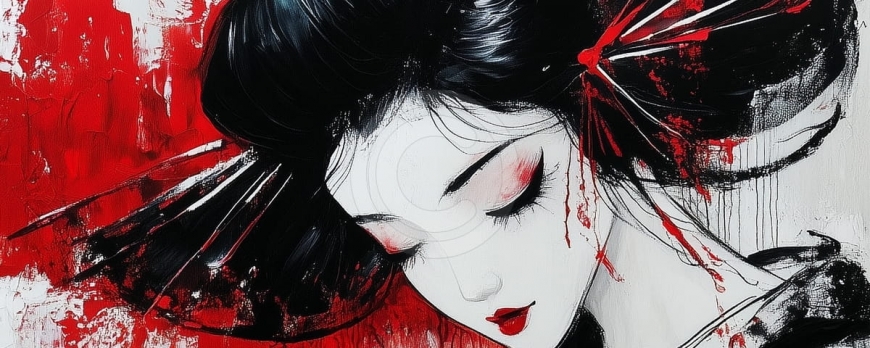
Japanese Paintings: Where Silence Becomes Art
There is a particular kind of silence that seems to exist inside a Japanese painting. It can be found in the mist surrounding a distant mountain, in the empty space between two branches, or in the solitary figure of a bird resting on a tree. At first, the painting may appear remarkably simple. There may be only a few forms, restrained colors and large areas of untouched space. Yet after looking at it for a while, something changes. The emptiness no longer feels empty, and the simplicity begins to reveal an extraordinary amount of meaning.
Perhaps this is one of the most fascinating things about Japanese art. It does not always try to tell you everything. Instead, it leaves enough space for you to complete the experience yourself.




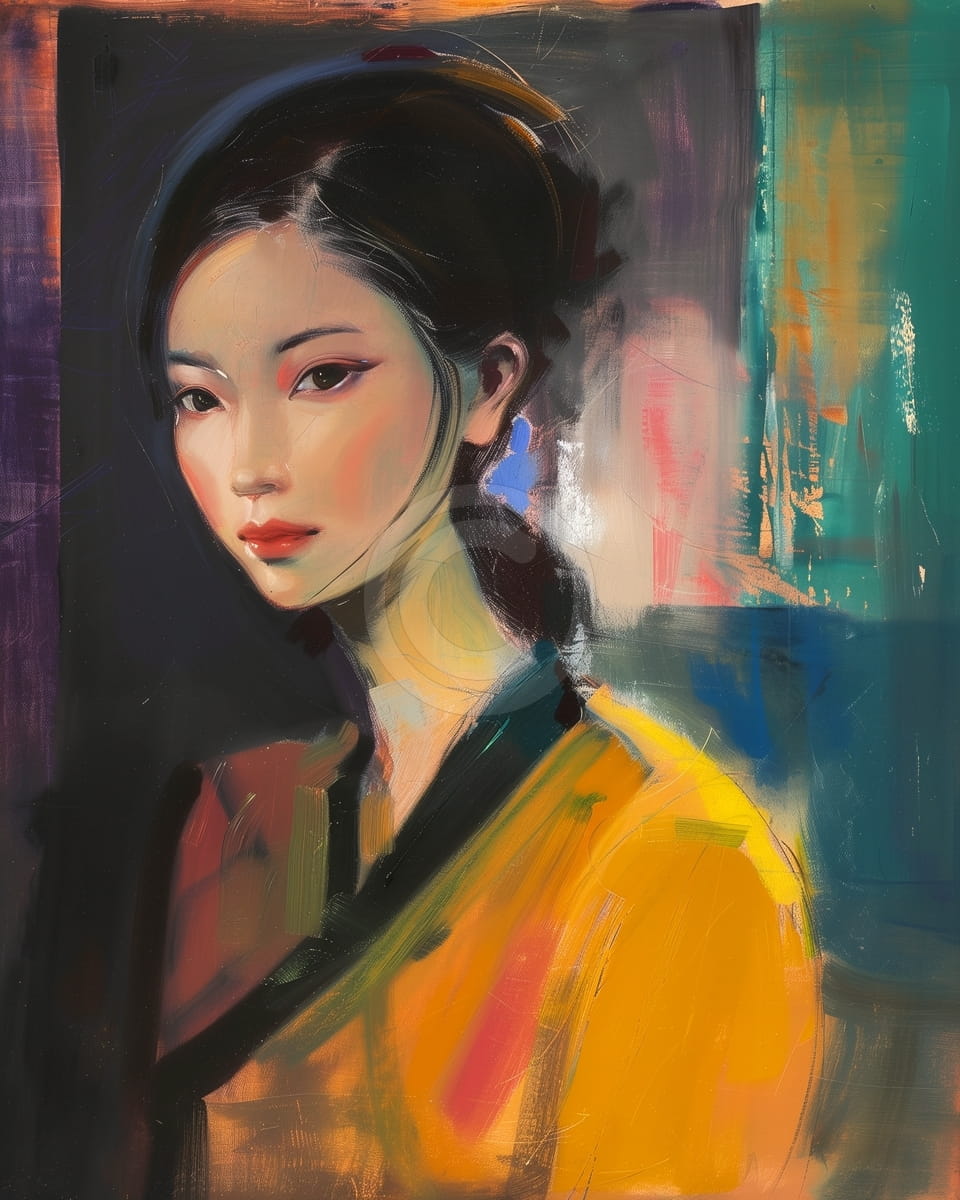

For centuries, Japanese artists have looked at the natural world with an unusual combination of precision and restraint. Mountains, rivers, flowers, birds and changing seasons became much more than subjects to be reproduced. They became ways of expressing emotions, ideas about time and reflections on the fragile nature of life. This is why Japanese painting can feel peaceful and contemplative even when the subject itself is quite ordinary. A falling leaf, a snow-covered branch or a distant mountain can become a meditation on existence.
To understand why, it helps to go back to a time when painting in Japan was deeply connected with poetry, calligraphy, Buddhism and the observation of nature.
When a landscape became a state of mind
Some of the earliest important developments in Japanese painting were strongly influenced by Chinese art. Artists encountered Chinese traditions of landscape painting, ink painting and calligraphy, and gradually transformed these influences into something distinctly Japanese. By the medieval period, monochrome ink painting had become closely associated with Zen Buddhism, and painters discovered that a landscape could express far more than the appearance of a place.
Imagine standing before a mountain landscape painted almost entirely with ink. The artist has not attempted to reproduce every tree, rock and distant peak. Instead, some mountains are barely visible, dissolving into washes of gray. A few darker brushstrokes suggest trees in the foreground, while large portions of the paper remain untouched.
That empty paper is important.
In Western painting, we are often accustomed to thinking of empty space as something that must be filled. In Japanese painting, however, emptiness can become part of the composition itself. It can represent mist, distance, sky or simply the space in which the viewer's imagination is allowed to move.
This sensitivity to space is connected with the Japanese aesthetic idea of ma, the meaningful interval between things. The absence of an object does not necessarily mean that nothing is happening. Sometimes what has been left out is precisely what gives the image its atmosphere.
This is also why Japanese ink painting, or sumi-e, can be so expressive despite its limited palette. Ink is never simply black. A change in the amount of water, pressure of the brush or speed of a stroke can create an astonishing range of tones. One confident movement might describe the trunk of a tree, while a lighter, almost transparent wash can suggest mountains disappearing into the distance.
The artist is not trying to show everything.
The artist is trying to show what matters.
Nature was never simply a background
There is another important difference between Japanese painting and the way nature is often treated in Western art. In many Japanese works, nature is not merely a beautiful setting surrounding human activity. It is the main character.
The seasons, in particular, became an endless source of inspiration. Spring brought cherry blossoms; summer offered lush vegetation and rain; autumn introduced brilliant leaves and a sense of approaching winter; and winter reduced the landscape to bare branches, snow and silence.
These changes were appreciated not simply for their visual beauty, but because they reminded people of the passage of time.
The Japanese concept of mono no aware expresses, in part, a sensitivity to the impermanence of things—the awareness that beauty is often inseparable from the fact that it will disappear. Cherry blossoms are beautiful partly because they do not remain forever. Autumn leaves are beautiful precisely because their brilliant colors announce their eventual fall.
This gives Japanese painting a subtle emotional quality that can be difficult to describe. A landscape may appear peaceful, but there is often something slightly melancholic beneath that tranquility. The painting seems to be saying that this particular moment exists only briefly, and that we should pay attention while it is here.
The result is an art that can make something as simple as a tree feel deeply poetic.
The moment when Japanese art became spectacular
It would be a mistake, however, to imagine that Japanese painting was always quiet, monochromatic and minimalist. There is another side to the tradition that is almost the complete opposite: magnificent, colorful and intensely decorative.
During the later medieval and early modern periods, Japanese artists created enormous folding screens covered with landscapes, flowers, animals, birds and scenes from everyday life. Gold leaf became an important element of these works, producing surfaces that could glow in the subdued light of traditional Japanese interiors.
These paintings were not necessarily intended to be contemplated in the same way as a small hanging scroll. They were part of the architecture around them. A folding screen could divide a room while simultaneously transforming it into a landscape. A painted sliding door could make a wall disappear into a garden filled with birds and flowers.
The relationship between painting and interior space was therefore fundamentally different from the modern idea of placing a framed picture on an empty wall. Japanese painting could become part of the environment itself.
This is one reason the tradition has remained so influential in interior design. Japanese artists understood that a painting does not exist in isolation. The surrounding space, the light in the room and the distance from which the work is viewed can all become part of the experience.
The floating world
Then, during the Edo period, Japanese visual culture took another fascinating turn.
The cities were growing, commerce was expanding, and a new urban culture was developing. Art began to reflect the pleasures, fashions and personalities of this changing society. From this world emerged ukiyo-e, the famous "pictures of the floating world."
Suddenly, Japanese artists were depicting actors, courtesans, beautiful women, travelers, wrestlers and scenes from everyday urban life. Landscape also became an increasingly important subject, eventually producing some of the most recognizable images in Japanese art.
Artists such as Katsushika Hokusai and Utagawa Hiroshige demonstrated how powerful a landscape could become when it was reduced to a carefully constructed arrangement of shapes, lines and colors. Hokusai's The Great Wave off Kanagawa, for example, does not depend on traditional European ideas of realistic perspective to create its enormous sense of movement and drama.
The composition is bold and almost graphic. The wave dominates the image, while Mount Fuji appears in the distance, surprisingly small in comparison.
This ability to arrange an image in an unexpected way would eventually have consequences far beyond Japan.
When Europe discovered Japan
In the nineteenth century, Japanese prints began arriving in Europe in increasing numbers. European artists were fascinated by what they saw.
The compositions looked different. Figures were sometimes cropped by the edge of the image. Perspective could be unconventional. Large areas of flat color replaced the gradual shading that European painters had traditionally used. Everyday subjects could be treated with the same visual sophistication as historical or religious scenes.
The influence became known as Japonisme and played an important role in the development of modern European art.
Artists such as Vincent van Gogh, Claude Monet and Edgar Degas were among those fascinated by Japanese prints and aesthetics. Their interest was not simply a passing fashion. Japanese art offered European artists a different way of organizing visual reality at a moment when many were already searching for alternatives to academic painting.
The Japanese approach suggested that a picture did not have to imitate the world exactly in order to communicate something powerful. A painting could be decorative, emotional and simplified at the same time.
In this sense, Japanese art helped open a door toward modernism.
Tradition meets the modern world
Japan itself was undergoing enormous changes during the same period. After the Meiji Restoration of 1868, the country rapidly modernized and increased its contact with Europe and the United States. Western-style oil painting became increasingly influential, creating a fascinating artistic tension.
Should Japanese artists embrace Western techniques, or should they preserve their own traditions?
The answer eventually became more complicated than either choice.
The term Nihonga, meaning Japanese painting, came to describe approaches that retained Japanese materials and techniques while allowing artists to address modern subjects and ideas. Traditional pigments, ink, paper and silk could coexist with new approaches to composition and representation.
Japanese painting therefore did not survive by remaining frozen in the past. It survived by changing.
This is perhaps one of the most important characteristics of Japanese art as a whole. Tradition is not necessarily treated as something that must be protected from change. Instead, older ideas can be reinterpreted and brought into new contexts.
That is why Japanese painting can feel simultaneously ancient and remarkably contemporary.
The beauty of imperfection
There is yet another idea that helps explain the enduring appeal of Japanese art: the appreciation of imperfection and impermanence.
The terms wabi and sabi are often used in the West to describe a Japanese appreciation for simplicity, age, restraint and the beauty of things that are imperfect or transient. Although these ideas are considerably more complex than the popular phrase "wabi-sabi" sometimes suggests, they point toward an important characteristic of Japanese aesthetics.
Perfection is not always the ultimate goal.
A weathered wooden surface can be beautiful because time has changed it. A slightly irregular ceramic bowl can feel more human than a perfectly manufactured object. A painting can leave part of its subject undefined and still feel complete.
The same philosophy can be felt in Japanese landscapes. The tree does not have to be perfectly symmetrical. The mountain does not have to be fully visible. The flower does not have to remain forever in bloom.
There is beauty precisely because everything changes.
Perhaps this is why Japanese paintings often feel so natural inside contemporary homes. Modern interiors frequently value simplicity, calmness and carefully chosen spaces, and Japanese art has understood the expressive power of restraint for centuries.
A large landscape with mist and empty space can make a room feel quieter. A delicate branch with blossoms can introduce color without overwhelming the surroundings. A traditional Japanese-inspired composition can create a sense of atmosphere without demanding that every detail be examined.
The painting becomes part of the room rather than competing with it.
Why Japanese paintings still speak to us
Looking at Japanese painting today, it is easy to focus on the recognizable elements: cherry blossoms, Mount Fuji, cranes, bamboo, misty mountains, elegant figures or traditional landscapes. But beneath these familiar images lies something much more universal.
Japanese artists have spent centuries asking how much can be expressed without saying everything.
They discovered that a few brushstrokes can suggest an entire landscape. That an empty area can sometimes be more powerful than a crowded composition. That nature can become a language for expressing human emotions, and that imperfection can make beauty more meaningful rather than less.
Perhaps this is why Japanese painting continues to resonate with people who know little about Japanese art history. You do not need to understand every historical period or artistic technique to appreciate the quietness of a misty landscape or the elegance of a single flowering branch.
The painting meets you where you are.
And if you are drawn to this particular combination of serenity, nature, elegance and atmosphere, you can explore the Japanese paintings collection at PastelBrush, where these influences can be brought into a contemporary interior through Japanese-inspired wall art.
Ultimately, the enduring fascination of Japanese painting may come down to a deceptively simple idea: beauty does not always become stronger when we add more to it. Sometimes the opposite is true. Sometimes removing what is unnecessary allows us to notice what was there all along—the quiet shape of a mountain, the movement of a bird, the changing color of a season, or simply a moment of stillness.
And perhaps, in a world that is constantly asking us to look at more, Japanese painting offers a rare invitation to look at less—and see more.