
Animal Paintings: Why We Never Get Tired of Looking at Animals
Long before people began decorating their homes with framed paintings, they were already drawing animals.
Deep inside prehistoric caves, thousands of years ago, early humans painted horses, bison, deer and other creatures that shared their world. The animals were not painted simply because they were attractive. They were important to survival, mythology and human imagination. A powerful animal could represent danger, strength or courage; a deer could become part of a hunting story; a horse could embody speed and freedom.
Something about that relationship has remained with us.
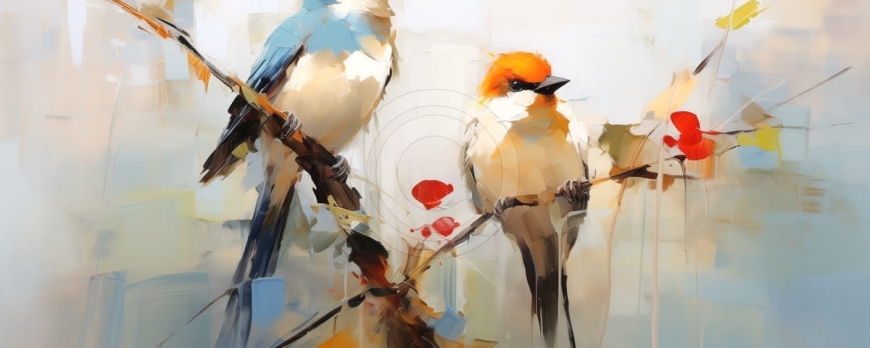
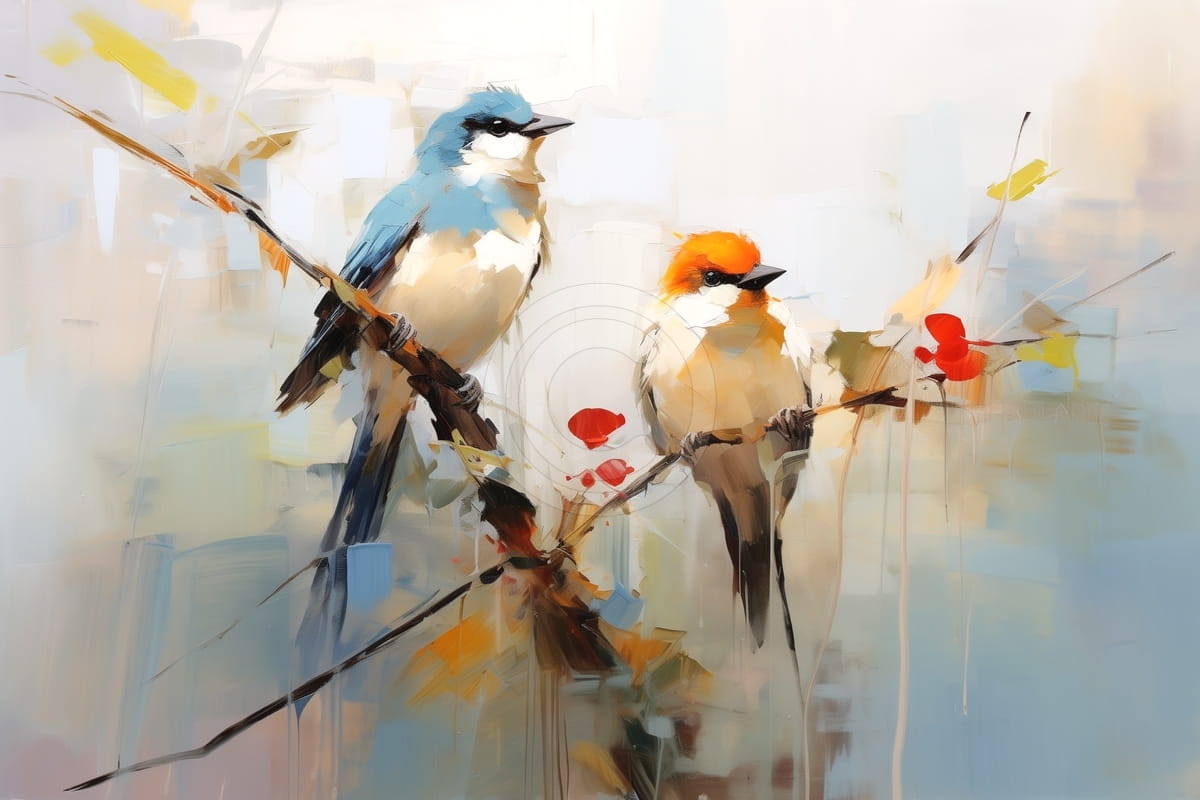
Thousands of years later, we may no longer depend on a horse for transportation or follow wild animals through the forest in search of food, but we still stop when we see a beautifully painted animal. A dog's expression can make us smile. A horse standing in an open landscape can create a feeling of freedom. A wild lion can bring a sense of strength and drama into a room, while a quiet bird can make a space feel calm and contemplative.
Animal paintings have survived because animals are not simply subjects. They are characters.
And unlike a landscape or an architectural painting, an animal often seems to look back at us.





The oldest subjects in art
There is something almost mysterious about the fact that some of humanity's earliest surviving works of art are paintings of animals. In the caves of prehistoric Europe, artists created remarkably sophisticated images of horses, bison, aurochs and other creatures, often using the natural contours of the rock to give their bodies volume and movement.
We will never know exactly what every one of those paintings meant to the people who created them. They may have been connected with hunting, ritual, storytelling or beliefs about the natural world. What we do know is that these early artists were already paying extraordinary attention to the appearance and behavior of animals.
They noticed the curve of a back, the position of the legs, the shape of a horn and the way an animal moved.
In other words, one of the earliest forms of artistic observation was also an observation of animals.
That fascination continued as civilizations developed. Animals appeared in Egyptian art, Greek and Roman art, Asian painting, medieval manuscripts and Renaissance works. They were depicted realistically, symbolically and sometimes imaginatively, depending on the culture and the story being told.
A lion could represent power. An eagle could symbolize authority. A dove could suggest peace. A horse could represent nobility or freedom.
The animal was rarely just an animal.
When animals became part of human stories
As painting developed, animals increasingly found themselves inside stories about people.
A horse might carry a king into battle. A dog might appear beside a noble family as a symbol of loyalty. A hunting scene could display wealth and status while simultaneously celebrating the beauty of the natural world.
Portrait painters discovered that including an animal could tell us something about the person being portrayed. A nobleman with a hunting dog communicated something very different from a child holding a small pet.
The animal became a kind of visual language.
This is one reason animal paintings can feel surprisingly personal. Even when there is no human figure in the composition, we instinctively search for personality. We wonder whether the horse looks proud or restless, whether the dog appears playful or serious, whether the cat looks curious or completely indifferent to our existence.
And perhaps that is part of the charm.
Animals allow artists to explore personality without words.
The rise of the animal portrait
Eventually, artists began giving animals something very close to the status of human portrait subjects.
The tradition of animal portraiture became particularly strong in Europe from the seventeenth century onward. Wealthy families commissioned paintings of prized horses, hunting dogs and other animals that were important to their lives and estates.
A horse was not merely a horse. It could be an exceptionally valuable racehorse, a beloved companion or a symbol of its owner's wealth and prestige.
Dogs were particularly suited to this kind of art because of their close relationship with humans. Their individual personalities were recognizable, and owners wanted to preserve the appearance of animals they cared about.
This is where animal painting begins to become surprisingly intimate.
A portrait of a person preserves a face and a moment in someone's life. A portrait of a beloved animal does much the same thing, preserving a particular expression, posture or personality that might otherwise exist only in memory.
That emotional connection is still one of the strongest reasons people choose animal artwork for their homes.
The wild animal changes everything
There is a completely different feeling when the animal is wild.
A domestic dog can suggest companionship. A horse can suggest freedom and elegance. But a lion, tiger, wolf or elephant carries something much older and more powerful.
Wild animals remind us that nature exists beyond the comfortable boundaries of human life.
A painting of a lion staring directly toward the viewer can create a remarkable sense of presence. A tiger emerging from a dark background introduces tension and mystery. A wolf standing in a snowy landscape can suggest solitude, independence and freedom.
The artist does not necessarily need to show an entire story.
Sometimes the expression is enough.
This is particularly effective in contemporary animal wall art, where artists often simplify the background and allow the animal itself to dominate the composition. The result can be dramatic without becoming complicated.
A large animal painting can transform a wall because the viewer's attention is naturally drawn toward the eyes and face of the animal.
We instinctively make eye contact.
Why we connect so strongly with animals
There is also a psychological reason animal paintings work so well.
Humans are remarkably sensitive to faces. We look for eyes, expressions and emotional signals almost automatically. When we see an animal looking toward us, we begin interpreting its expression in much the same way we interpret the expression of another living creature.
Is it curious?
Calm?
Alert?
Playful?
Threatening?
Sad?
Of course, we cannot know exactly what an animal in a painting is thinking. But that uncertainty gives the image room for our own interpretation.
A good animal painting therefore becomes partly about the viewer.
Two people can look at the same portrait of a dog and see completely different things. One might be reminded of a childhood pet; another might simply appreciate the animal's warmth and expression.
The painting becomes a bridge between the natural world and our own memories.
Horses: the timeless symbol of freedom
Few animals have inspired artists as consistently as the horse.
For thousands of years, horses have been associated with movement, power and freedom. Their physical form is naturally dramatic: the long neck, muscular body, flowing mane and powerful legs give artists an extraordinary subject to work with.
A horse running across an open field communicates movement even when the painting itself is completely still.
This is one of the great pleasures of animal art. The artist creates the illusion of movement with nothing more than composition, posture and brushwork.
A group of horses can create a completely different atmosphere. Instead of focusing on one animal, the painting becomes a study of energy and rhythm, with bodies moving together across a landscape.
This is why horse paintings work particularly well in spaces where a sense of openness and freedom is desired. They can make an interior feel energetic without relying on bright colors or complicated decoration.
Dogs and cats: art becomes personal
If horses often represent freedom, dogs bring us closer to something much more intimate: companionship.
Dogs have lived alongside humans for thousands of years, and their relationship with us is unusually emotional. A painting of a dog can therefore be more than a decorative image. It can communicate loyalty, affection, playfulness or simply the comforting presence of a familiar companion.
Cats create a different mood.
They have an almost effortless ability to appear elegant, mysterious and slightly amused by everything around them. Artists have been fascinated by this for centuries, and modern cat paintings often exaggerate precisely those qualities: expressive eyes, graceful forms and an attitude that seems to say that the room belongs to them.
Whether realistic or stylized, paintings of domestic animals have a special advantage: they feel familiar.
You don't need to know anything about art history to understand the expression of a dog or the attitude of a cat.
From realism to modern animal art
For centuries, artists worked hard to make animals look anatomically convincing. Painters studied muscles, bones, movement and behavior, especially when animals were important subjects of hunting scenes or scientific illustration.
Modern artists, however, became increasingly interested in something else.
What happens if we stop trying to reproduce the animal exactly as it appears in nature?
The answer can be seen in contemporary animal paintings, where realism can coexist with abstraction, bold brushwork, unusual colors and simplified shapes. An artist may preserve the unmistakable silhouette of a lion while replacing its natural colors with unexpected tones. Another might reduce a horse to expressive lines and areas of color.
The animal remains recognizable, but it becomes an interpretation rather than a copy.
This is an important distinction.
A photograph records what an animal looks like at one particular moment. A painting can tell us how the animal feels.
That difference gives artists enormous freedom.
The animal as a reflection of ourselves
Perhaps the most interesting reason animals continue to appear in art is that we use them to talk about ourselves.
We admire the courage of the lion, the freedom of the horse, the loyalty of the dog and the independence of the cat. We associate the eagle with vision and strength, the owl with wisdom and the butterfly with transformation.
These associations are not universal or identical across cultures, but they reveal something fundamental about the human imagination: we constantly search for meaning in the natural world.
When we choose an animal painting for our home, we may therefore be choosing more than an attractive image.
A powerful animal might express confidence. A peaceful bird might create a feeling of calm. A group of horses might remind us of movement and freedom. A beloved dog might evoke companionship and memory.
The artwork becomes a small statement about the atmosphere we want to create around us.
Why animal paintings work so well in modern interiors
There is another reason animal art has remained so popular: animals are remarkably adaptable subjects.
A detailed wildlife painting can become the dramatic focal point of a living room. A minimalist drawing of a horse can fit naturally into a modern interior. A colorful portrait of a parrot or tropical bird can introduce energy into an otherwise restrained space. A black-and-white dog portrait can create an elegant, almost photographic atmosphere.
Because the subject is immediately recognizable, the viewer does not need to spend time understanding the image.
But that does not mean the artwork is simple.
The best animal paintings balance recognition with interpretation. You know what you are looking at, yet the artist gives you something more to discover in the expression, texture, movement or atmosphere.
That balance makes animal artwork particularly versatile as wall art.
A painting that looks back at you
Perhaps this is why animal paintings have never really gone out of fashion.
A landscape can transport us somewhere else. An abstract painting can make us think differently about color and form. A portrait can preserve the presence of a person.
But an animal painting does something slightly different.
It establishes a relationship.
You look at the animal, and the animal appears to look back.
For a moment, the distance between the human world and the natural world becomes smaller. We recognize something familiar in an expression that belongs to another species, and we are reminded that long before animals became subjects of decoration, they were companions, rivals, symbols, sources of fascination and an essential part of the human story.
That connection is what gives animal art its lasting appeal.
Whether you are drawn to the quiet intelligence of a dog, the elegance of a horse, the mystery of a wild cat or the vibrant colors of exotic birds, an animal painting can bring more than decoration to a room. It can introduce character, emotion and a sense of life.
And perhaps that is the real secret of a great animal painting: it does not simply show us an animal. It makes us stop and wonder what that animal is saying without words.