

Beautiful Paintings: Discovering the Art That Makes Us Stop and Look
There are paintings that we admire because they are technically impressive, paintings that make us curious because we cannot immediately understand them, and then there are paintings that simply make us stop. We may not know the name of the artist or the period in which the work was created, and we may not be able to explain exactly why we like it. Yet something about the image captures our attention. Perhaps it is the light, the colors, the expression of a face or the peacefulness of a landscape. Sometimes it is simply the feeling that the painting creates.
This is one of the most interesting things about beautiful paintings: beauty in art cannot be reduced to a single formula. What one person finds beautiful may leave another completely indifferent. A quiet landscape may be deeply moving to someone who loves nature, while another person may be drawn to an energetic abstract composition filled with color. One viewer may appreciate the delicate realism of a portrait, while another may find greater beauty in a painting that barely resembles the world around us.
Throughout the history of art, ideas about beauty have changed constantly. Artists have moved from classical ideals of proportion and harmony toward increasingly personal interpretations of color, light, movement and expression. Landscape painting, portraiture, still life and abstract art can all produce a sense of beauty, even though they approach the subject in completely different ways.
Perhaps this is why beautiful paintings remain so appealing. They do not all look alike. What connects them is their ability to create a visual and emotional experience that stays with us.
What Makes a Painting Beautiful?
It is tempting to think that beauty comes from technical perfection. Certainly, skill can make a painting impressive. The ability to represent light, texture, human expression or the natural world with extraordinary precision has fascinated viewers for centuries.
But technical skill alone does not necessarily create beauty.
A painting can be perfectly executed and still feel cold or distant. Another may contain loose brushwork, unusual proportions or simplified forms and yet have an extraordinary emotional power. The history of art provides countless examples of artists who deliberately moved away from conventional ideas of perfection in order to create something more personal.
Beauty can come from harmony, but it can also come from contrast. It can be found in symmetry, but also in irregularity. A peaceful scene can be beautiful, but so can a dramatic sky, a weathered face or a landscape transformed by a storm.
What matters is the relationship between all the elements of the painting and the response they create in the viewer.
This is why beauty in art is so closely connected with emotion. We do not simply look at a beautiful painting; we experience it.
The Beauty of Nature
Some of the most immediately appealing paintings are those that depict the natural world. A landscape gives the viewer something familiar while also offering an opportunity to escape from everyday surroundings.


Mountains, forests, rivers, fields and oceans have been represented by artists in countless ways. Landscape painting can be highly realistic, carefully recording the appearance of a particular place, or it can become much more atmospheric and expressive. The landscape may be based on reality while using color and light to communicate a particular mood.
A sunset is a good example. The actual event may last only a few minutes, but a painting can preserve its golden light indefinitely. The same is true of a misty morning, a field in summer or a quiet beach at the end of the day. The artist is not simply recording scenery; they are preserving an experience.
This is one reason landscape paintings work so naturally in the home. They give us the sensation of looking beyond the walls. A painting of an open landscape can create a feeling of space, while a forest or mountain scene can introduce a connection with nature.
Even when the landscape is entirely imaginary, it can still feel strangely familiar.
The Beauty of Color
Sometimes we are attracted to a painting before we even understand what it depicts. The reason may be color.
Color has the extraordinary ability to influence the emotional character of an image. Warm golds, oranges and reds can make a painting feel energetic or intimate. Blues and greens can suggest calmness and distance, while pinks and violets can create a softer, more dreamlike atmosphere.
Artists have repeatedly discovered that color does not have to reproduce reality in order to communicate something true. A landscape does not need to have a purple sky in real life for purple to express the way the landscape feels.
This became particularly important as modern artists increasingly freed themselves from traditional expectations of realistic representation. Fauvist artists, for example, pushed color away from naturalistic description, demonstrating how powerful non-naturalistic color could become.
The result is an important lesson about beauty: sometimes a painting becomes beautiful not because it shows the world exactly as it is, but because it shows us how the world can feel.
The Quiet Beauty of Flowers
Flowers have always been among the most popular subjects in painting, perhaps because they combine natural beauty with an extraordinary variety of shapes and colors.


A vase of flowers can be intimate and traditional, but modern flower paintings can take the subject in completely different directions. Petals can become broad fields of color, stems can be reduced to expressive lines and the entire arrangement can approach abstraction.
There is something particularly interesting about this transformation. We recognize the flower almost immediately, yet the artist can change almost everything about it. A rose does not have to be painted as a botanically accurate rose to remain recognizable. A few curves and carefully chosen colors may be enough.
This gives floral art a remarkable versatility. It can be romantic, modern, minimalist, dramatic or joyful, depending on how the artist interprets the subject.
Flowers also bring an organic quality into interiors filled with straight architectural lines. Their curves, irregularities and natural colors can soften a room without making it feel overly decorative.
Portraits and the Beauty of Human Expression
Beautiful paintings are not always about beautiful scenery. Sometimes the most powerful subject is another person.
Portrait painting has a long history, and its purpose has changed considerably over time. Portraits have documented identity, social position and personal appearance, but they have also become opportunities to explore personality and emotion. The evolution of portraiture can be seen in the movement from idealized representations toward increasingly realistic and eventually more abstract interpretations of the individual.
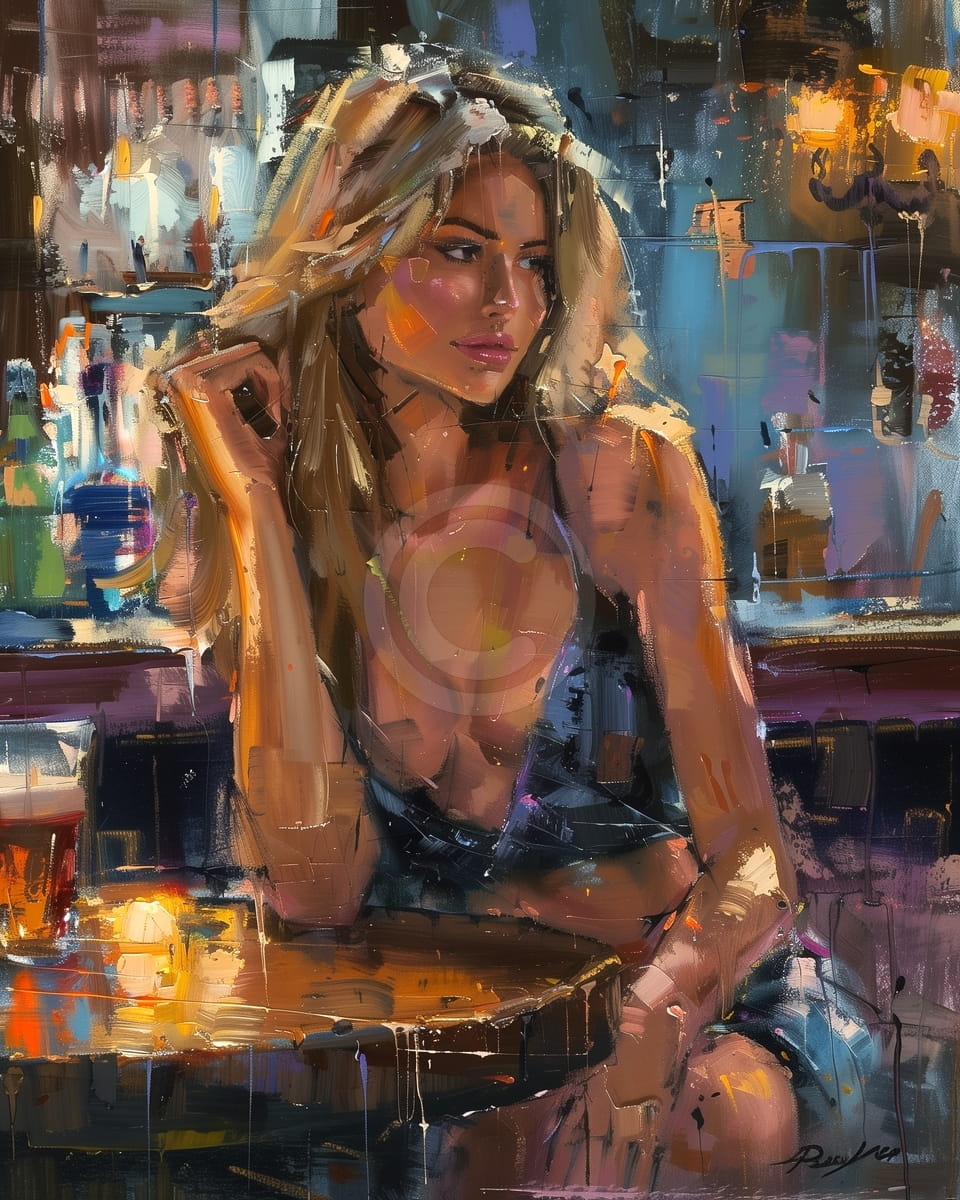


A beautiful portrait does not necessarily depict a conventionally beautiful person. What captures our attention may be the expression, the pose, the light falling across the face or the atmosphere surrounding the figure.
Sometimes the smallest details are the most powerful. A slight smile, a distant gaze or a particular gesture can make a painted figure seem psychologically present.
This is what separates a portrait from a simple representation of a face. The artist is attempting to communicate something about the person rather than merely reproduce their appearance.
When Beauty Becomes Abstract
One of the most fascinating developments in modern art was the realization that a painting could be beautiful without representing a recognizable object at all.
Abstract art shifted attention toward elements such as line, shape, color, rhythm and composition. Instead of looking at a painting and asking, “What is this a picture of?”, the viewer can simply respond to the relationships within the image.


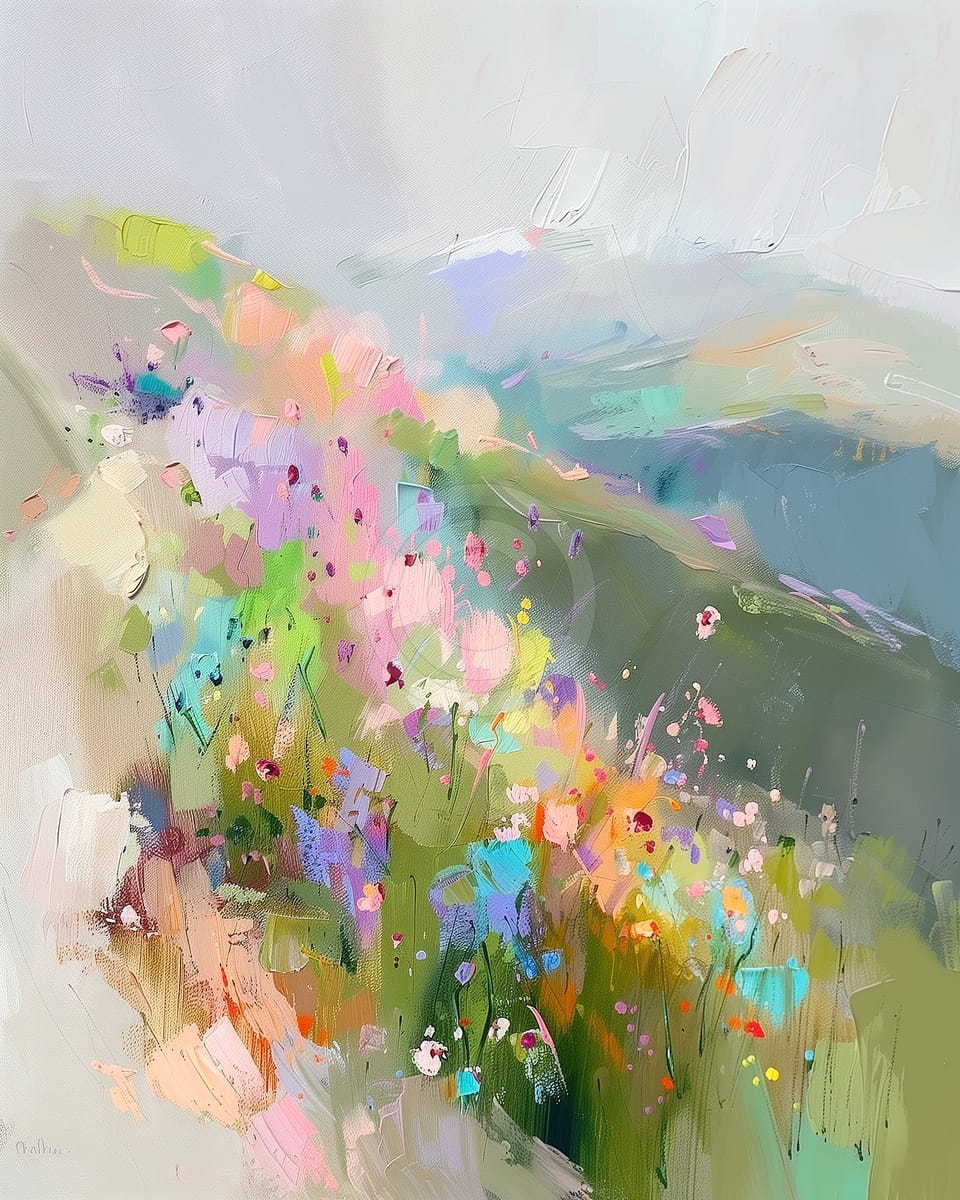

A beautiful abstract painting might contain sweeping forms that suggest movement, geometric shapes arranged with precision or layers of color that create an almost atmospheric sensation. Another might be chaotic and expressive, using visible brushwork to communicate energy.
The absence of a recognizable subject can actually make the experience more personal. Without a fixed story, the viewer has more freedom to decide what the painting means.
One person might see a landscape. Another might see movement or music. Someone else may simply enjoy the balance of colors.
There does not have to be one correct interpretation.
Beauty, Light and Atmosphere
Light has always been one of the great subjects of painting. It can transform the appearance of everything it touches.
A room illuminated by afternoon sunlight can feel completely different from the same room at night. A landscape under a cloudy sky can become mysterious, while the warm light of evening can make an ordinary field appear almost magical.
Artists have often used these changes to create atmosphere rather than simply to describe objects. The beauty of a painting may therefore exist in its lighting as much as in its subject.
This is especially clear in paintings depicting sunsets, dawns, moonlight, mist or rain. These moments are temporary in reality, but the artist can make them permanent.
The painting becomes a kind of memory of light.
Why Beautiful Paintings Belong in the Home
There is a difference between seeing a painting in a museum and living with one every day. In a museum, we approach the artwork as an object of attention. At home, the relationship is quieter and more personal.
A painting becomes part of the room. We see it while having breakfast, while talking with friends, while reading or simply walking past it. Over time, we may notice details that escaped us when we first saw it.
This is why choosing beautiful wall art is not simply about finding something that matches the furniture. The painting should have enough character to remain interesting after the initial impression has faded.
A landscape may remind you of a place you visited. A floral painting may bring warmth to a neutral room. An abstract work may introduce colors that change the atmosphere of the space. A cityscape may remind you of travel or a favorite city.
The artwork becomes connected to your own life.
Finding Beauty Beyond Trends
Interior design trends change quickly. Colors that are fashionable today may become less popular a few years from now, and decorating styles constantly evolve.
Art can work differently.
A genuinely beautiful painting does not necessarily depend on being fashionable. Its appeal can come from composition, color, atmosphere and emotional connection rather than from its relationship to a particular trend.
This is particularly important when choosing artwork for a home. A painting may remain on the wall for many years, so it is worth choosing something that you genuinely enjoy rather than something that simply happens to be popular at the moment.
The most successful interiors are often those where the artwork feels personal rather than selected according to a rigid decorating formula.
Beauty Is Different for Everyone
Perhaps the most important thing to remember when searching for beautiful paintings is that there is no universal definition of beauty.
Art history contains paintings that were considered shocking or unattractive when they first appeared and later became celebrated masterpieces. Modern art repeatedly challenged the assumption that beauty required realism, symmetry or traditional subject matter. Even today, exhibitions and collections continue to bring together radically different ideas of what makes an artwork compelling.
This is part of what makes looking at art so enjoyable. We are not required to agree.
A painting can be beautiful because it is peaceful. It can be beautiful because it is dramatic. It can be beautiful because of a single color, an expressive brushstroke or an unexpected composition. It can even be beautiful because it makes us feel something that we cannot immediately explain.
And perhaps that final quality is the most important.
The Paintings We Remember
When we think about beautiful paintings, we often imagine masterpieces displayed in famous museums. Yet beauty does not belong exclusively to art history's most celebrated works. It can be found in a quiet landscape, a contemporary abstract composition, a vase of flowers, a portrait or a simple painting that happens to create exactly the right feeling.
The best artwork for a home is not necessarily the painting that everyone else considers beautiful. It is the one that makes you want to look at it again.
Over time, that repeated experience can become part of everyday life. A painting may greet you every morning with the same landscape, the same colors or the same expression, yet somehow you continue to discover something in it.
That is perhaps the real power of beautiful paintings. They do not merely decorate a wall. They give us an image to return to, a moment of beauty that can remain present long after the moment that inspired it has disappeared.
And in a world that is constantly changing, there is something wonderfully comforting about having a beautiful image that stays.